

AI Search / GEO and SEO
GEO vs SEO for AI Marketing: How They Work Together
Written By Nishi Singh • Last Update Oct 15, 2026
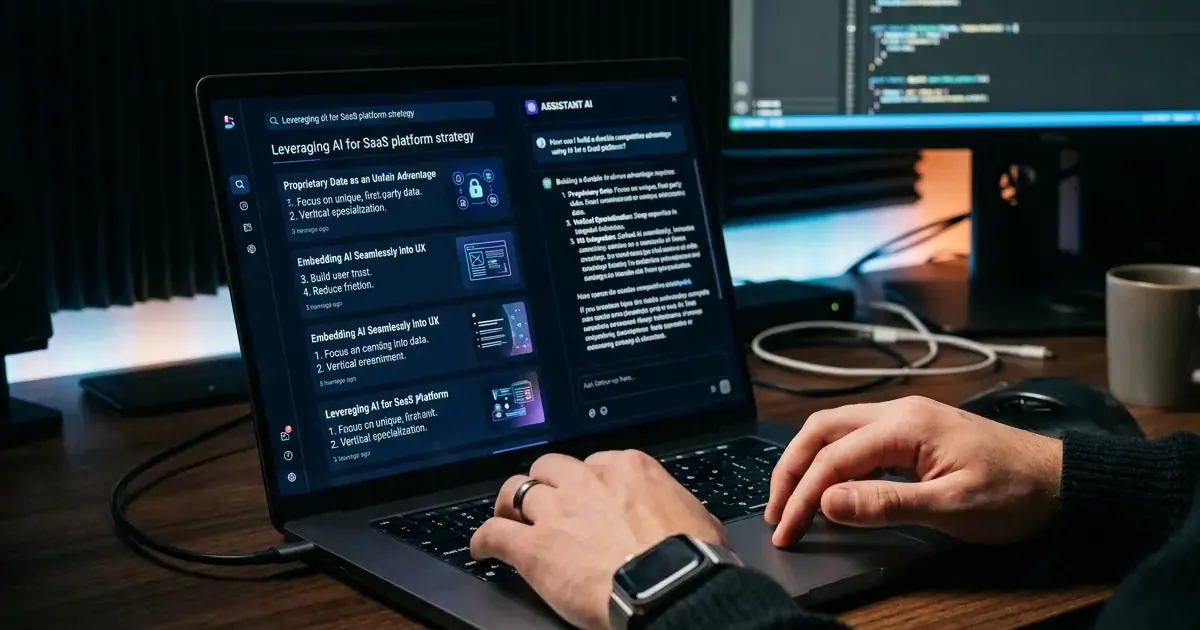
If someone has told you that your business now needs “GEO” as well as SEO, you are probably wondering whether that means a second budget, a second supplier and a second set of reports. The honest answer to GEO vs SEO is that they are two views of the same goal, being found when people look for what you sell, and most of the work overlaps.
This guide is for business owners and marketing managers who need to decide where to spend time and money. You’ll get plain definitions, a side-by-side comparison of goals, signals, metrics and timelines, an honest look at where the two disciplines agree and where they pull apart, a way to prioritise budget, and one combined workflow you can run every month. If you are also weighing up AI agents to do some of the work, our guide to autonomous AI marketing agents covers that side.
Quick Answer: How do GEO and SEO work together?
SEO earns rankings and clicks in search results; GEO earns mentions and citations inside AI-written answers. They work together because AI tools such as Google’s AI Overviews, ChatGPT search, Perplexity and Copilot mostly find their sources through search indexes. Strong technical SEO and helpful content are the base, and GEO adds answer-first structure, consistent brand facts, third-party mentions and AI visibility tracking.
Key Takeaways
- SEO and GEO share their foundations: crawlable, indexed, genuinely useful pages are the entry ticket for both.
- SEO is measured in rankings, clicks and conversions; GEO in mentions, citations, share of voice and AI referral visits.
- Google says its AI features need no special optimisation beyond SEO best practice, so GEO is mostly a change of emphasis rather than a separate discipline.
- Most small businesses should fix SEO foundations first, then shift a growing share of effort to GEO where their buyers research with AI tools.
- One combined monthly workflow avoids duplicated work and reports that contradict each other.
What is SEO?
Search engine optimisation (SEO) is the work of helping search engines crawl, understand and rank your pages for the searches your customers make. It has three broad parts. Technical SEO makes sure pages can be crawled, indexed and loaded quickly. On-page SEO and content make each page relevant and useful for a topic. Off-page SEO builds reputation through links, reviews and local listings.
The result is a ranked list: blue links, map listings, product listings and other rich results on Google and Bing. Success is measured in rankings, impressions, clicks and, most importantly, the enquiries and sales those clicks produce.
What is GEO?
Generative engine optimisation (GEO) is the work of making your brand more likely to be mentioned, summarised and cited when AI systems write answers. Those systems include Google’s AI Overviews and AI Mode, ChatGPT, Perplexity, Gemini and Microsoft Copilot. Answer engine optimisation (AEO) is a close cousin that focuses on making individual passages easy to quote.
The big difference is what the user sees. Instead of ten links to choose from, they get a written answer that may name three or four businesses and link to a few sources. Visibility means being named, recommended or linked inside that answer. For anyone planning an AI marketing strategy, that shifts attention from a single page’s ranking to how your business is described across the whole web.
GEO vs SEO: what is actually different?
The table below sets the two side by side. It is a simplification, but it captures the practical differences that affect planning.
| Aspect | SEO | GEO |
|---|---|---|
| Main goal | Rank pages highly for target searches and win the click | Be mentioned, recommended or cited in AI-generated answers |
| Where you appear | Google and Bing results, map listings, rich results | AI Overviews, AI Mode, ChatGPT, Perplexity, Gemini and Copilot answers |
| What the system does | Ranks and lists your page | Reads several sources, then writes its own answer, sometimes with links |
| What helps | Relevance, content quality, links, technical health, page experience, local signals | The same foundations, plus clear answer passages, consistent business facts, independent mentions, reviews and up-to-date content |
| Key metrics | Rankings, impressions, clicks, click-through rate, organic conversions | Mention rate, citation rate, share of voice, AI referral visits, Bing AI citations |
| Timelines | Recrawling can take from several days to several months (Google’s own range); content and authority gains usually build over months | Answers can change from one run to the next; page fixes count once recrawled, while reputation builds over months |
| Main tools | Search Console, Bing Webmaster Tools, GA4, rank trackers, site crawlers | AI visibility trackers, prompt logs, Bing’s AI Performance report, GA4 referral data |
Where do GEO and SEO overlap?
More than most GEO sales pitches suggest. Google’s guidance on AI features says there are no additional requirements to appear in AI Overviews or AI Mode, and no special optimisation is needed beyond SEO fundamentals. A page must be indexed and eligible to show with a snippet. OpenAI says its OAI-SearchBot crawler is what surfaces websites in ChatGPT search, and Microsoft reports Copilot citations through Bing Webmaster Tools. In each case, the route into AI answers starts with being crawlable and indexed.
The shared work includes:
- Technical health: crawlable pages, clean indexing, fast and stable page experience
- Helpful, original content written for people, with the important information in text
- Structured data that matches the visible content
- Accurate business listings and a steady flow of genuine reviews
- Clear internal linking so every important page can be found
Take an independent estate agent. A well-written area guide that answers “what are the best primary schools near the high street?” and “how long does it take to commute into town?” can rank for local searches and also be quoted in an AI answer. One piece of work serves both.
Where do GEO and SEO pull in different directions?
The overlap is large, but there are real differences in emphasis:
- Clicks versus answers. An AI answer can satisfy a question without a click. Google says clicks from AI Overviews tend to be higher quality, with users more likely to spend more time on the site, but you should expect fewer clicks on purely informational questions.
- Keywords versus conversations. SEO often maps one main keyword to one page. AI tools handle long, conversational questions and follow-ups, and Google says its AI features may run several related searches (“query fan-out”) to build one answer. Your content needs to cover the follow-up questions, not just the head term.
- Links versus mentions. SEO values links. In GEO, being named in the sources an AI reads matters whether or not there is a link. A review round-up that names you without linking can still put you in the answer.
- One results page versus many engines. Rank tracking is mature and fairly stable. AI answers differ by engine, run and user, so GEO measurement is based on samples.
- Google first versus Bing too. Many SEO plans focus almost entirely on Google. GEO gives Bing more weight, because Microsoft’s AI experiences report citations through Bing Webmaster Tools.
How should you prioritise budget between GEO and SEO?
Framing GEO vs SEO as an either/or choice doesn’t help here, and there is no correct ratio. Start from where your business is today and how your buyers research:
| Your situation | Focus first on | Why |
|---|---|---|
| Technical problems or few pages indexed | SEO foundations | Neither channel works if pages can’t be crawled and indexed |
| Local service business with a thin Google Business Profile | Local SEO and listings | Profiles and reviews feed both map results and “near me” AI answers |
| B2B or high-ticket purchase with long research | A growing GEO share | Buyers ask long comparison questions that AI tools answer by naming a few providers |
| Strong rankings but missing from AI answers | GEO | Close the gaps in answer structure, business facts and third-party mentions |
| Ecommerce with a large catalogue | SEO plus product data | Product pages, structured data and an up-to-date Merchant Center feed support both |
As an illustration, a B2B IT support firm with a sound website and around £2,000 a month for organic search might keep most of that on SEO content and technical work, set aside a few hundred pounds’ worth of time for prompt tracking, fact consistency and digital PR, and rebalance every quarter based on what the tracking shows. Treat any split as a starting hypothesis to test, not a rule.
What does a combined GEO and SEO workflow look like?
Running one workflow, rather than two, keeps the work joined up. Here is a monthly cycle that suits most small teams:
- Research once. Build a single list of target keywords and customer questions from Search Console, sales enquiries and AI prompt tests. Our guide to AI agents for keyword research shows how to speed this up.
- Check technical health. Crawl the site, fix indexing problems and confirm robots.txt allows Googlebot, Bingbot, OAI-SearchBot and PerplexityBot.
- Plan each page with both lenses. Give every target page a keyword focus and a short list of questions it must answer directly.
- Publish or refresh. Add answer-first sections, tables, specifics, a named author and a last-updated date.
- Sync your facts. Update one fact sheet and push changes to your website, Google Business Profile, Bing Places and directories.
- Earn mentions and links together. One piece of digital PR or expert commentary can win a link for SEO and a mention for GEO.
- Measure in one dashboard. Combine Search Console, Bing Webmaster Tools (including its AI Performance report), GA4 AI referrals, rank tracking, prompt tracking and enquiries.
- Review and reprioritise. Move effort towards whatever is producing enquiries.
For an ecommerce homeware brand, that might mean refreshing the wool throw category page with a care and sizing table (SEO and GEO), fixing an old returns policy still quoted on a marketplace listing (GEO), and pitching a seasonal styling guide to an interiors blog (both). Our generative engine optimization checklist lists each check in detail, and our guide to AI agents for SEO optimization explains which steps you can safely automate.
How does AI in marketing change the way you report results?
The spread of AI in marketing and search means some old reports can mislead. Google includes AI Overviews and AI Mode traffic in the Search Console Performance report under the “Web” search type, without a separate breakdown. Bing’s AI Performance report shows citations and cited pages rather than clicks. ChatGPT adds utm_source=chatgpt.com to the links it sends, which makes those visits easy to spot in GA4.
So build reports that show the whole picture: organic clicks and rankings, AI search visibility from your prompt tracking, AI referral visits, branded search trends and, above all, enquiries and sales. If informational clicks dip while enquiries hold steady, that is not necessarily a problem. Our article on Google search vs AI search for food and beverage brands shows how this plays out in one sector.
Which GEO myths should you ignore?
- “GEO replaces SEO.” AI answers are built largely on search indexes. Weak SEO means weak GEO.
- “You need special schema or an llms.txt file.” Google says there is no special schema.org markup and no new machine-readable or AI text file needed for its AI features. llms.txt is a proposed convention with no confirmed support from the major AI search engines.
- “You can pay to be cited.” Ads inside AI tools are a separate paid channel. OpenAI documents a crawler, OAI-AdsBot, that checks landing pages submitted as ads on ChatGPT. Being cited in the answer itself is earned.
- “Blocking AI bots removes you from AI search.” Not necessarily. OpenAI separates GPTBot (training) from OAI-SearchBot (search), and Google says Google-Extended does not affect inclusion or ranking in Google Search.
For a closer look at how agents can monitor citations for you, read our guide to AI agents for GEO and AEO.
How NSP Global Services Can Help
NSP Global Services runs SEO and GEO as one programme, so you get a single plan, a single report and no duplicated work. Our SEO services cover technical, on-page and local search, while our generative engine optimisation agency team and AI search optimisation services focus on ChatGPT, Gemini, Perplexity and Copilot.
If Google’s AI Overviews matter most in your market, our Google AI Overview optimisation service targets them directly. Talk to our team about the right balance for your budget.
Conclusion
The GEO vs SEO debate is less of a contest than it first appears. SEO builds the foundations that AI tools rely on to find you; GEO makes sure that, once found, your business is described accurately, answers questions clearly and is talked about by others.
Fix the foundations first, run one combined workflow, measure both rankings and AI mentions, and move budget towards whatever produces real enquiries. That approach holds up however search changes next.
Frequently Asked Questions
Is GEO replacing SEO?
No. Most AI search tools, including Google’s AI Overviews and AI Mode, ChatGPT search and Copilot, find their sources through search indexes and their own crawlers. If your pages can’t be crawled, indexed and understood, they are unlikely to be cited. GEO builds on SEO by adding answer-first content, consistent business facts, independent mentions and AI visibility tracking.
Do I need a separate agency for GEO?
Not necessarily. Because GEO and SEO share most of their foundations, one team running both usually avoids duplicated audits, conflicting advice and two sets of reports. Whoever you work with, ask how they measure AI mentions and citations, how that ties back to rankings and enquiries, and which tasks they automate versus check by hand.
Does ranking first on Google mean I will appear in AI Overviews?
Not automatically. Google says a page must be indexed and eligible to show with a snippet, that AI Overviews only appear when its systems judge them helpful beyond the classic results, and that they may use query fan-out to find a wider set of supporting pages. A top ranking helps, but it does not guarantee a citation.
Which costs more, GEO or SEO?
Neither has a fixed price, and much of the work overlaps. SEO budgets usually go on technical fixes, content and links. GEO adds prompt tracking, business-fact consistency work and digital PR aimed at the sources AI tools cite. Most small businesses fix SEO foundations first, then move a growing share of effort to GEO as tracking shows where they are missing.
What should a combined GEO and SEO report include?
Include rankings, organic clicks and impressions from Search Console, AI mention and citation rates from prompt tracking, citations from Bing’s AI Performance report, AI referral visits in GA4 and branded search trends. Most importantly, show enquiries and sales. That way a dip in informational clicks can be read alongside what is happening to revenue.
Does Bing matter more for GEO than for SEO?
For many businesses, yes. Microsoft’s AI experiences, including Copilot and AI summaries in Bing, report citations to site owners through Bing Webmaster Tools, and its AI Performance report shows which pages are cited. Verifying your site in Bing, submitting a sitemap and keeping a Bing Places listing up to date are small jobs that support both channels.
Can small businesses compete with big brands in AI answers?
Often, on specific questions. Big brands dominate broad topics, but AI tools answer many detailed, local or niche questions where a specialist with clear, accurate, well-reviewed content can be the best source. Focus on the questions your best customers ask, answer them more specifically than anyone else, and keep your business details consistent everywhere.

Nishi Singh
(Content Writer & SEO Manager)
NSP Global Services is a leading digital marketing agency specialising in SEO, content strategy, and paid advertisements — helping businesses across SaaS, B2B, and e-commerce achieve measurable growth online.
Posted on: Oct 15, 2026