
1. PPC
PPC provides immediate visibility for local, niche and project-type searches while your organic presence develops.

Reach business owners, start-ups and organizations actively searching for a website designer, a new website, a redesign or an online store, with targeted PPC campaigns built around the projects you want to win.
At NSP Global Services, we create PPC strategies for freelance web designers, design studios and small web agencies. Our approach combines local and niche keyword research, portfolio-led landing pages, proposal-request and call tracking, lead qualification and continuous optimization, so your budget is focused on enquiries that match your services, budget range and ideal clients.
People looking for a website designer often search by location, industry, platform or project type, and many compare a few designers before asking for quotes. Our PPC campaigns are structured around project intent, service area, client type and enquiry opportunities so your studio appears when a business is ready to brief a designer.
PPC services for website designers are paid advertising services that help freelance designers, studios and small web agencies attract businesses and organizations actively looking for a new website, a redesign or ongoing web support.
These services typically include local and niche keyword research, campaign strategy, Google Ads management, ad copy development, portfolio and service landing pages, enquiry and proposal-request tracking, lead qualification, budget management, remarketing and ongoing optimization.
The objective is to generate project enquiries that fit your services and budget range, and to show clearly which campaigns lead to proposals and signed projects.

We shape campaigns around the work you actually want, whether that is local small-business sites, e-commerce builds, redesigns or a niche such as hospitality, trades or professional services.
Many clients want a designer nearby or one who already understands their sector. We combine service-area targeting with industry-specific searches to reach both.
Web design searches attract DIY builders, students and very small budgets. Negative keywords, clear ad messaging and qualifying enquiry forms help filter out enquiries that are unlikely to fit.
We review search terms, enquiry quality, cost per enquiry and proposal outcomes to refine keywords, ads, bids and landing pages over time.
Reporting connects ad spend with enquiries, discovery calls and proposals where you track them, so you can see which campaigns bring in projects worth pursuing.
Explore each service below, or jump straight to the one you need.
We create and manage Google Ads campaigns around the project types, locations and client niches that matter most to your studio.
Our services can include:
Available targeting options and ad formats can vary by platform, country and account, and campaign structure depends on your services and capacity.
We identify keywords based on project intent, location, client industry, platform, competition and the likely quality of the enquiries they produce.
Our keyword research can include:
The goal is to reach businesses planning a real project while reducing clicks from DIY builders, job seekers, students and template shoppers.
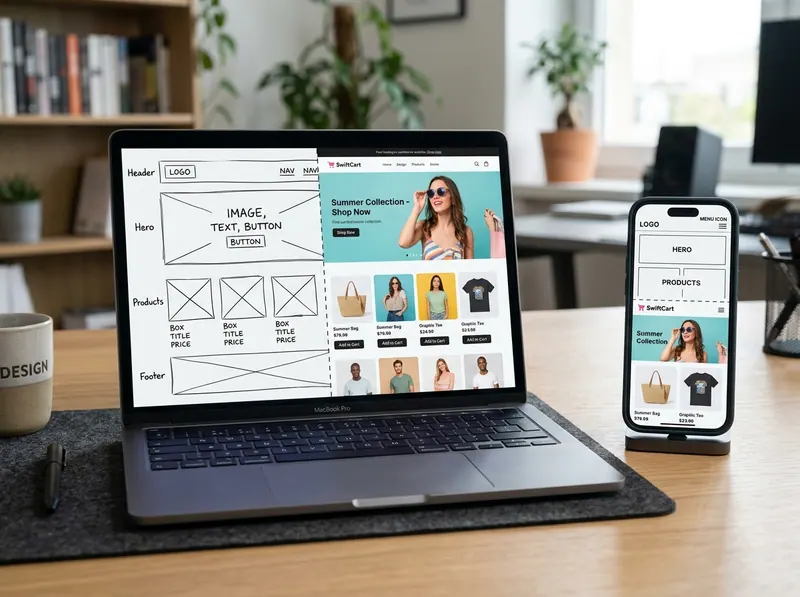
For a web designer, the landing page is also a portfolio piece. It needs to show relevant work quickly, explain how projects run and make it easy to request a proposal.
We can optimize PPC landing pages for:
 Your Studio · Web DesignSmall business · E-commerce · Redesigns
Accurate tracking helps web designers see which searches and ads lead to genuine project enquiries rather than just portfolio visits.
Depending on your website and sales process, we can monitor agreed actions such as proposal requests, contact form submissions, discovery call bookings, phone calls and, where you record outcomes, qualified leads and signed projects.
We review cost per enquiry and enquiry quality to help move budget toward the locations, niches and project types that lead to proposals.
Our approach can include:
Our reporting shows how ad spend turns into enquiries and, where tracked, qualified leads and proposals, with clear next steps for optimization.
Reports can include:
PPC for a web design business needs more than bidding on the phrase web design. We build campaigns around project type, location, client industry, lead quality and the capacity you have for new work.

Many clients prefer a designer they can meet or who knows their area. Campaigns can target the towns and regions you serve with location-specific ads and pages.
If you specialize in sectors such as hospitality, trades or professional services, dedicated campaigns can match searches like website design for restaurants to relevant portfolio work.
New builds, redesigns, e-commerce stores and landing pages attract different budgets and timelines, so each can have its own ads, keywords and budget.
Negative keywords, honest ad copy and forms that ask about budget range, timeline and goals can help reduce low-fit enquiries before they reach your inbox.
Prospects want proof. Landing pages can show work relevant to their search, explain your process and make requesting a proposal straightforward.
After launch, we refine keywords, bids, schedules, ads and landing pages based on enquiry volume, lead quality and the projects that follow.
Choosing a website designer is a considered decision, so paid advertising should support clients from the first search to a signed proposal.
Reach businesses searching for a website designer, a redesign or an online store in your area or niche.
Show relevant portfolio work, services, process and credentials so prospects can judge whether you fit their project.
Make it easy to request a proposal or book a discovery call, with forms that capture the details you need to qualify the lead.
Where permitted, use remarketing to stay visible to prospects who viewed your portfolio but were not yet ready to enquire.
Our PPC expertise can support a range of web design businesses, including:

Campaign strategy depends on your services, portfolio, target locations, client niches, capacity and applicable advertising policies.
Web design is not a heavily regulated advertising category, but platform rules still apply. Google Ads policies cover areas such as misrepresentation, destination requirements and trademarks, and in the UK the ASA's CAP Code expects advertising claims to be accurate and capable of substantiation.
Our PPC planning focuses on honest claims about turnaround times, results and pricing, portfolio work you have permission to show, careful use of software and platform names in ad text, landing pages that match the ad, and accurate location targeting.
Policy enforcement and available targeting can vary by platform and country. We therefore recommend reviewing ad claims, trademark use and landing-page content before launch, rather than assuming every message, keyword or format will be approved for every web design business.
PPC gives web designers a measurable way to reach businesses that are actively planning a new website or a redesign.

Searches for a website redesign company or a web designer nearby often come from businesses ready to brief someone, and paid search can place your studio in front of them.
Budgets and schedules can be raised when you have room for projects and reduced when you are fully booked, which is harder to do with many other channels.
PPC data can show which keywords and campaigns produce enquiries, discovery calls and proposals, not just traffic.
Ads and landing pages let you test niches, service packages, messaging and calls to action to learn what resonates with the clients you want.
Search-term data shows the language businesses use when looking for a designer, insight that can also inform your service pages, portfolio and SEO.
Clients often check ads, organic results, reviews and AI answers before shortlisting a designer, so each channel should support the others.
PPC provides immediate visibility for local, niche and project-type searches while your organic presence develops.
SEO helps build lasting organic visibility for service pages, location pages, portfolio case pages and helpful guides.
Answer Engine Optimization helps structure clear answers to questions clients ask, such as how long a website takes or what a redesign involves.
Generative Engine Optimization helps make your services, specialisms, locations and portfolio easier for AI systems to understand and potentially reference.
Combined, they can help prospective clients find, check and shortlist your studio across search engines and AI-powered tools.
Generative Engine Optimization (GEO) and Answer Engine Optimization (AEO) can help web designers make their services, specialisms and past work easier for search engines and AI-powered search tools to understand.
Our approach can include:
The aim is clear, accurate and well-organized information about your studio that search engines and AI systems can interpret with confidence.
We review your services, portfolio, ideal clients, target areas, competitors, capacity, existing marketing and business goals.
We map local, niche and project-type searches, build negative keyword lists and plan a campaign structure that fits your capacity.
We configure campaigns, ads, targeting, budgets, enquiry and call tracking, and landing pages that feature relevant portfolio work.
Once reviewed and approved, campaigns launch according to the agreed strategy, budget and platform requirements.
We refine keywords, bids, schedules, ads and landing pages using enquiry volume, lead quality and proposal outcomes.

Experience across digital marketing, paid advertising, SEO, content, and website optimization.
Experience supporting businesses across different industries and digital marketing requirements.
A strong focus on communication, transparency, and measurable campaign objectives.
Experience working with major digital advertising platforms and performance marketing campaigns.
Turn local and niche searches into qualified project enquiries with a PPC strategy built around your studio, your portfolio and the clients you want.