
Attract more applicants with SEO built for design institutes. We help design schools and colleges rank for fashion, interior, graphic, UX and product design courses, admissions questions and portfolio requirements, so prospective students and parents find your programs first.
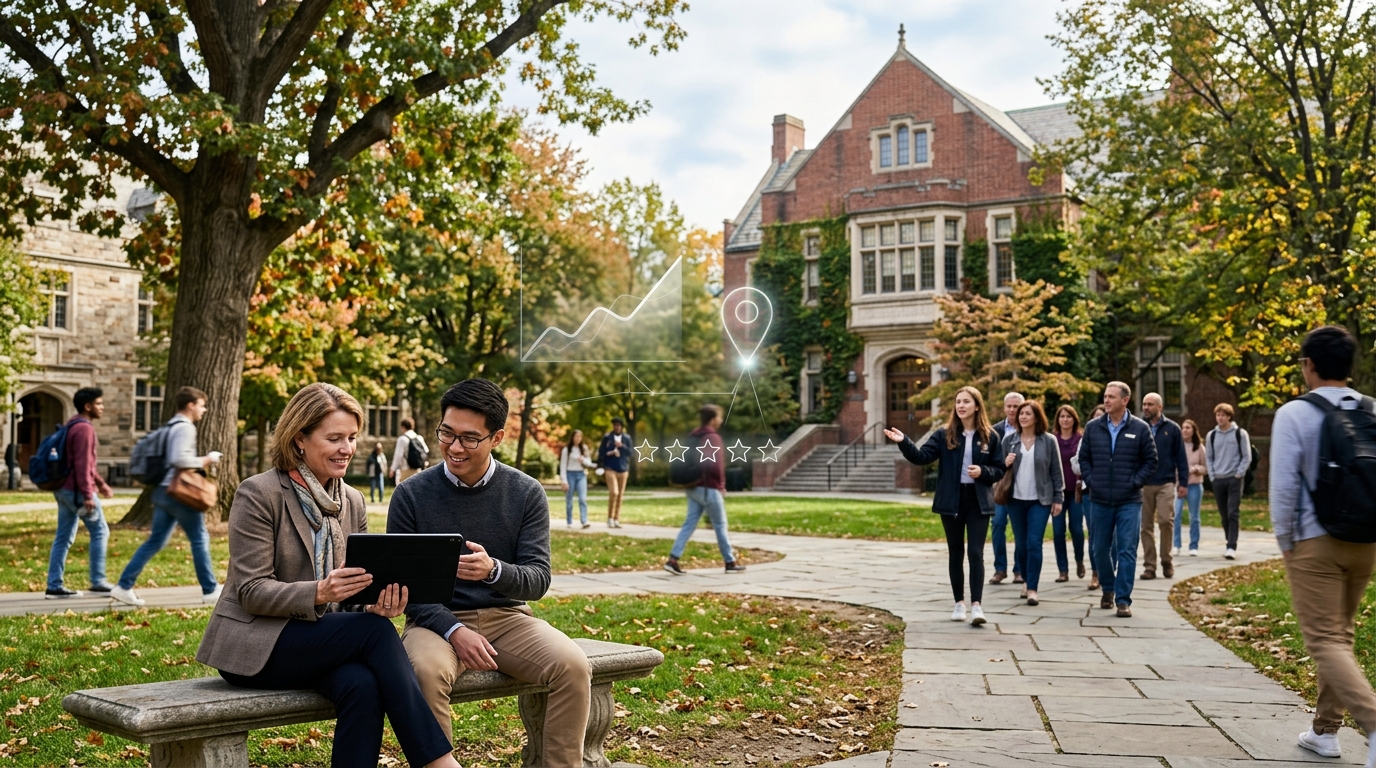
Prospective students search for the career first: “how to become a fashion designer”, “best interior design courses”, “UX design diploma online”. Then come the anxious questions: “design school portfolio requirements”, “entrance exam for design college”, “fees and scholarships”. Parents join the search late. We build course and admissions pages for every step.
Design institute SEO is the process of optimizing a design school’s website, including course pages, admissions and portfolio guidance, faculty and alumni showcases, fees and campus information, so it ranks when prospective students search for design education. It combines technical SEO, content, local SEO and link building to increase qualified applications.
Design students compare courses, portfolios, faculty, outcomes and fees across many schools. Your site has to show creative quality and answer practical admissions questions in one place.
Members, families, partners and the public all search differently, and each needs a clear path through your site.
Rank each program, from fashion to UX, on its own page rather than one general courses listing.
Answer portfolio, entrance test and eligibility searches clearly to reduce drop-off before applying.
Rank alongside larger organizations and directories for the program, service and information searches people make.
Build topical authority with useful educational, service and industry-focused content.
Help AI Overviews and assistants recommend your design institute for detailed, conversational questions.
A complete search program covering technical foundations, content, local visibility and authority.
Improve crawlability, indexation, site architecture, Core Web Vitals, mobile performance, XML sitemaps, canonicalization and internal linking.
Identify high-value program, service, information and local keywords for your design institute.
Optimize titles, meta descriptions, headings, URLs, content, images, internal links and search intent.
Structure program, service, admissions, event and information pages so people find answers fast.
Improve visibility for design institutes in local, regional and service-area searches through Google Business Profile, citations and location pages.
Create useful, search-led content around design courses, admissions, portfolio preparation, faculty, student work and design careers.
Build authority through relevant editorial links, digital PR, industry publications, partnerships and outreach.
Track rankings, organic traffic, enquiries, sign-ups, applications and other relevant SEO performance metrics.
Design institutes vary by discipline, level and delivery. We plan SEO around your programs and the students you want to reach.
Rank for fashion design degrees, diplomas and styling course searches.
Reach students searching for interior and spatial design programs and certifications.
Win graphic design, branding and visual communication course searches.
Target career changers searching for UX, UI and digital product design courses.
Capture product and industrial design degree searches from technical, creative students.
Rank part-time, evening and online design course searches for working learners.
Also see our pages for SEO for Distance Learning Centers, SEO for Drama Schools, and SEO for Drawing Teachers & Studios.
We map keywords to the right pages by search intent, rather than trying to rank a single page for every design institute-related query.

Many students choose a design school in their own city or one they can relocate to easily. Local SEO highlights each campus, open days, studio facilities and transport links for students searching by location.

Search is increasingly moving beyond traditional blue-link results. People now ask AI-powered search experiences for recommendations and expect direct, useful answers. Our Generative Engine Optimization (GEO) approach helps design institutes structure their content so search engines and AI systems can better understand, retrieve, summarize and potentially cite their information.
Clear headings, concise answers, logical content hierarchy and useful supporting information.
Strengthen relationships between your design institute, its services, locations and relevant education concepts.
Build comprehensive coverage around design courses, admissions, portfolio preparation, faculty, student work and design careers.
Create content around the natural-language questions people ask AI search platforms.
Connect related topics to establish stronger topical relationships.
Implement relevant structured data such as CollegeOrUniversity, EducationalOrganization, Course, Event and FAQPage markup where appropriate to help search engines interpret page information.
What makes us different from others.
Students and parents invest heavily in design education. We make accreditation, faculty credentials, real student work and honest outcome information easy for search engines and applicants to find.
Analyze technical SEO, content, competitors, keywords, backlinks and current visibility.
Identify the searches that matter to your design institute and map each one to the right page.
Develop the content, keyword, technical, internal-linking and authority-building roadmap.
Execute technical, on-page, content, information and local SEO improvements.
Optimize relevant content for direct answers and AI-powered search experiences.
Track performance and continuously refine the strategy based on data.
SEO experience across industries and business models.
Experience working across different websites and markets.
Focused on measurable SEO performance and client outcomes.
Recognised partner status across major ad platforms.
See how the same process has performed for clients across our other service lines.

Let’s build an SEO strategy that brings aspiring designers from their first career search to your application form.