

Alcohol & Beverage SEO / 2026 Guide
Alcohol eCommerce SEO: How Wine, Beer & Spirits Brands Can Increase Online Sales
Written By Nishi Singh • Last Update Sep 12, 2026
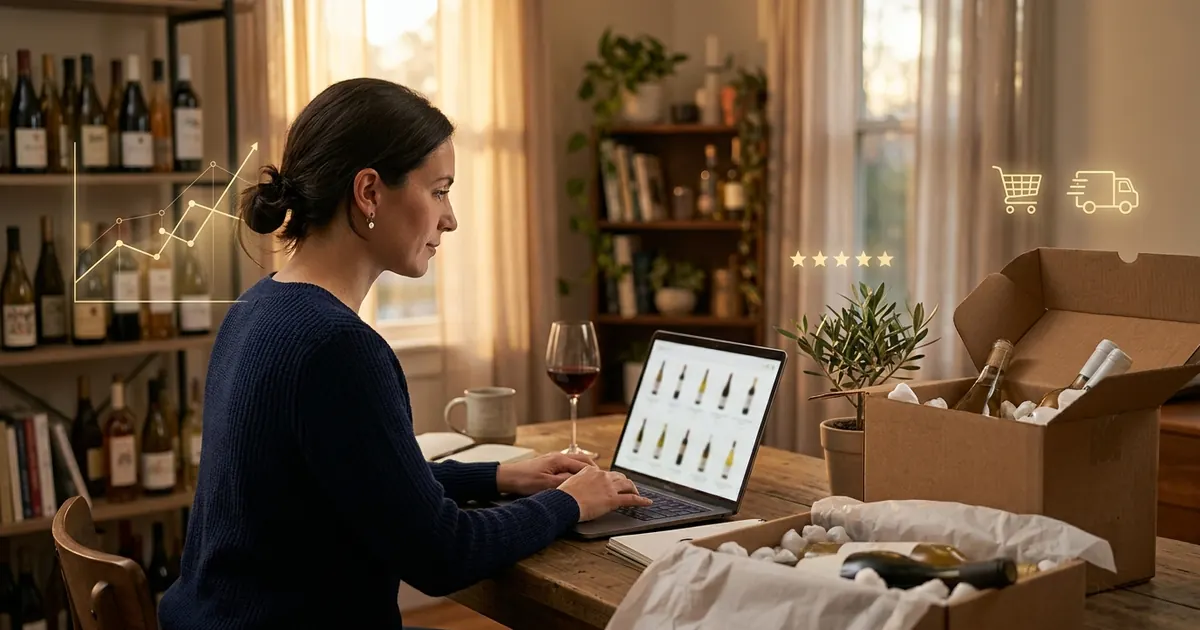
Alcohol eCommerce SEO is the process of optimizing wine, beer, spirits, brewery, liquor retail, and alcohol eCommerce websites to improve organic search visibility, attract high-intent customers and increase online sales.
For alcohol brands, ranking for a few keywords is no longer enough. Customers use Google and AI-powered search experiences to research products, compare brands, discover breweries and retailers, find local businesses, and decide what to purchase.
A successful alcohol SEO strategy combines product-page optimization, search-intent targeting, technical SEO, content marketing, local SEO, structured data, internal linking, Answer Engine Optimization (AEO), and Generative Engine Optimization (GEO).
NSP Global Services helps wine, beer, spirits, and brewery businesses develop search strategies designed to increase qualified organic traffic, strengthen online visibility, and support sustainable business growth.
What Is Alcohol eCommerce SEO?
Alcohol eCommerce SEO involves optimizing an alcohol-related website so search engines and AI-powered search systems can understand its products, services, expertise, and relevance to customer searches.
An effective strategy can help brands appear for searches across different stages of the buying journey, including:
- Informational searches: "What is single malt whisky?"
- Commercial searches: "Best craft beer brands"
- Transactional searches: "Buy wine online"
- Product searches: "Cabernet Sauvignon 2024"
- Brand searches: "[Brand] whisky"
- Local searches: "Brewery near me"
- Comparison searches: "Whisky vs bourbon"
- Seasonal searches: "Best wine for Christmas dinner"
The goal is not simply to generate more traffic. The goal is to attract relevant users with genuine interest in the products or services offered by the brand.
Why SEO Matters for Wine, Beer & Spirits eCommerce?
The alcohol market is highly competitive, with numerous brands competing for visibility across search engines, marketplaces, retailers, and local listings.
Paid advertising can generate immediate visibility, but organic search can provide a sustainable acquisition channel when supported by strong technical foundations and useful content.
An effective alcohol eCommerce SEO strategy can help businesses:
- Increase organic visibility
- Reach customers with high purchase intent
- Improve product and category discovery
- Build brand authority
- Generate relevant website traffic
- Strengthen local visibility
- Reduce long-term dependence on paid acquisition
- Support online and offline sales
- Establish topical authority in the alcohol industry
Search Intent Should Drive the Strategy
Different searches require different types of content.
For example, a person searching for "what is an IPA beer?" needs educational information, while someone searching for "buy IPA beer online" has much stronger transactional intent.
Alcohol brands should therefore create and optimize pages according to the purpose behind each search rather than trying to rank one page for every keyword.
How to Optimize Alcohol Product Pages for Search
Product pages are among the most commercially valuable pages on an alcohol eCommerce website.
However, many websites use short or duplicated product descriptions that provide insufficient information to users and search engines.
Each important product page should provide unique, useful and accurate information about the beverage.
Important product-page elements include:
- Product name
- Brand name
- Beverage type
- Product category
- Origin or region
- Size or volume
- ABV where appropriate
- Flavor or tasting profile
- Ingredients where relevant
- Serving suggestions
- Food pairing recommendations
- Product availability
- Pricing where applicable
- High-quality product images
- Customer reviews where genuine
- Relevant FAQs
- Internal links to related products and categories
- Appropriate structured data
Optimize Product Pages for Customer Questions
Product pages should also answer questions customers commonly ask.
For example:
What does this whisky taste like?
Provide a concise description of the flavor and tasting profile.
What food pairs well with this wine?
Provide practical food-pairing recommendations.
What type of beer is this?
Clearly explain the beer style and its characteristics.
This approach improves the usefulness of the page while creating content that can be understood and potentially surfaced by search and AI systems.
Local SEO for Breweries, Liquor Stores & Alcohol Brands
Alcohol businesses should not overlook local search.
Customers may search for:
- "Brewery near me"
- "Craft beer near me"
- "Wine shop in Mumbai"
- "Liquor store near me"
- "Whisky store near me"
- "Best brewery in Bengaluru"
- "Beer delivery near me"
For businesses with physical locations, local SEO can help connect online searches with real-world visits, purchases, and enquiries.
Key Local SEO activities include:
- Optimizing the Google Business Profile
- Maintaining accurate business information
- Creating useful location pages
- Building relevant local authority
- Encouraging genuine customer reviews
- Publishing locally relevant content
- Optimizing pages for location-based search intent
- Maintaining consistent business information across relevant platforms
For breweries and taprooms, local SEO can help customers discover the business, understand its offering and find relevant location information.
Content Marketing for Wine, Beer & Spirits Brands
Helpful content can expand the number of searches for which an alcohol brand can become relevant.
Instead of creating articles solely around keywords, brands should build content around real customer questions, product education, and industry topics.
Potential content topics include:
- Beer styles explained
- How craft beer is brewed
- Wine and food pairing guides
- Whisky production processes
- Single malt vs blended whisky
- How to choose a wine
- Cocktail and serving guides
- Beer tasting guides
- Wine region guides
- Spirits terminology
- Product comparisons
- Seasonal beverage guides
- New product or collection announcements
Build Topic Clusters
Rather than publishing disconnected blog posts, create groups of related content.
For example:
Pillar topic:
Craft Beer
Supporting topics:
- What is craft beer?
- Types of craft beer
- IPA vs lager
- How craft beer is brewed
- Best food pairings for craft beer
- How to choose craft beer
- Craft beer vs regular beer
These pages can be internally linked to relevant product and category pages.
This helps establish topical relevance and authority around important subjects.
Technical SEO for Alcohol eCommerce Websites
Technical SEO provides the foundation for organic search performance.
Even strong content can struggle if search engines cannot efficiently crawl, render or understand a website.
Important technical SEO areas include:
- Website speed
- Mobile usability
- Crawlability
- Indexation
- XML sitemaps
- Canonical URLs
- HTTPS
- Clean URL structures
- Internal linking
- Site architecture
- Duplicate-content management
- Broken-link management
- Image optimization
- Structured data
- JavaScript rendering
- Product and category navigation
A well-structured website makes it easier for search engines to discover relationships between products, categories, brands, locations and informational content.
Structured Data for Alcohol eCommerce Websites
Structured data can help search engines better understand the information presented on a webpage.
Depending on the page and implementation, relevant structured data may include:
- Product
- Offer
- Organization
- LocalBusiness
- BreadcrumbList
- Article
- WebSite
Product-related structured data can communicate information such as product names, brands, offers and availability when the markup accurately reflects visible page content.
Structured data should be implemented correctly and should not be used to provide information that is not actually available to users on the page.
Internal Linking for Alcohol SEO
Internal links help users and search engines discover related content across an alcohol website.
For example, a page about craft beer could link to:
- Craft beer products
- Beer categories
- Brewery pages
- Beer tasting guides
- Food-pairing content
- Related educational articles
A product page could link to:
- Its parent category
- Related products
- Brand pages
- Buying guides
- Relevant FAQs
This creates a connected content ecosystem rather than isolated pages.
Keyword Strategy for Alcohol eCommerce SEO
Alcohol brands should build keyword strategies around search intent, product categories, locations and customer questions.
Common keyword groups include:
| Keyword type | Example |
|---|---|
| Transactional | Buy whisky online |
| Commercial | Best craft beer brands |
| Product | Single malt whisky |
| Category | Red wine |
| Brand | [Brand] whisky |
| Local | Brewery near me |
| Informational | How is whisky made? |
| Comparison | Bourbon vs whisky |
| Seasonal | Best wine for Christmas |
The objective should not be to place every keyword on one page.
Instead, map each keyword cluster to the most appropriate product page, category page, location page, service page or informational article.
How to Optimize Alcohol Websites for Google and AI Search
Search is increasingly becoming conversational. Users may ask AI-powered search systems questions such as:
"Which whisky is good for beginners?"
"What wine pairs well with Indian food?"
"Where can I find craft beer in Mumbai?"
"What are the best Indian beer brands?"
To improve visibility across these evolving search experiences, alcohol brands should make their content easy to understand, extract, and verify.
GEO and AEO best practices include:
- Answer important questions directly
- Use clear and descriptive headings
- Provide concise definitions
- Create genuinely useful content
- Demonstrate industry expertise
- Build comprehensive topic clusters
- Maintain accurate product information
- Use structured data where appropriate
- Strengthen internal linking
- Keep business information consistent
- Support important claims with credible sources
- Avoid unnecessary keyword repetition
- Create content for people rather than search engines alone
What Is the Difference Between SEO, AEO and GEO?
| Optimization | Main objective | Example |
|---|---|---|
| SEO | Improve organic search visibility | Ranking for "buy craft beer online" |
| AEO | Provide direct answers to user questions | Answering "What is IPA beer?" |
| GEO | Improve content visibility and understanding in generative search | Helping AI systems understand an alcohol brand and its expertise |
These approaches should work together rather than being treated as separate marketing channels.
How to Measure Alcohol eCommerce SEO Performance
SEO success should not be measured only by keyword rankings.
Alcohol brands should monitor metrics that connect organic visibility with actual business outcomes.
Important KPIs include:
- Organic traffic
- Non-branded organic traffic
- Organic conversions
- Revenue from organic search
- Product-page traffic
- Category-page visibility
- Search impressions
- Organic click-through rate
- Conversion rate
- Local search visibility
- Google Business Profile interactions
- Indexed pages
- Ranking keyword growth
- Assisted conversions
Where measurable, brands can also monitor visibility across AI-powered search experiences.
The ultimate objective is to connect search visibility with qualified traffic, customer engagement, enquiries, transactions, and revenue.
Alcohol SEO Should Follow Applicable Regulations
Alcohol businesses operate in a regulated industry, and SEO and digital marketing strategies should account for applicable laws, platform policies, age restrictions and responsible marketing requirements in each target market.
Product information, advertising, eCommerce functionality and promotional content should be reviewed for compliance with the regulations applicable to the business's location.
Why Choose NSP Global Services for Alcohol SEO?
NSP Global Services helps wine, beer, spirits, brewery and alcohol eCommerce businesses develop SEO strategies aligned with their products, audiences and markets.
Our approach can include:
- Alcohol eCommerce SEO
- Beer SEO
- Brewery SEO
- Craft Beer SEO
- Wine SEO
- Spirits SEO
- Liquor Store SEO
- Technical SEO
- Keyword and search-intent research
- Product-page optimization
- Content strategy
- Local SEO
- Answer Engine Optimization
- Generative Engine Optimization
- Internal linking
- Structured data
- Competitor and SERP analysis
Rather than relying on keyword repetition or short-term ranking tactics, we focus on building topical relevance, technical quality, useful content and search visibility that can support sustainable organic growth.
Conclusion
Alcohol eCommerce SEO can help wine, beer, spirits, brewery and alcohol retail businesses reach customers at the moments that matter—from initial product research to local discovery and purchase decisions.
A strong strategy combines search-intent targeting, optimized product pages, helpful content, technical SEO, local visibility, structured data, internal linking, AEO and GEO.
The objective is not simply to rank higher. It is to make the brand, products and expertise easier for search engines, AI systems and potential customers to discover and understand.
NSP Global Services helps alcohol brands build sustainable SEO strategies focused on qualified organic visibility, customer engagement and meaningful business growth.
Explore our Liquor & Alcohol SEO Services
Alcohol SEO Services | Digital Marketing Services for Alcohol | Digital Marketing Services for Online Alcohol Stores | Alcoholic Beverage Wholesaler SEO Services | Alcohol Retail Monopoly SEO Services
Frequently Asked Questions About Alcohol eCommerce SEO
What is alcohol eCommerce SEO?
Alcohol eCommerce SEO is the process of optimizing wine, beer, spirits and other alcohol websites to improve organic visibility, attract qualified visitors and increase online sales.
How can SEO increase online sales for alcohol brands?
SEO helps alcohol brands reach customers who are actively searching for products, brands, categories and purchasing options, generating qualified organic traffic that can contribute to sales.
How do you optimize a wine, beer or spirits product page for SEO?
Optimize the product name, description, headings, product attributes, images, FAQs, internal links and relevant structured data while providing unique and useful information about the beverage.
What keywords should alcohol eCommerce websites target?
Alcohol websites should target a combination of product, category, brand, transactional, informational, and location-based keywords based on search intent and business objectives.
How can breweries improve their local SEO?
Breweries can improve local SEO by optimizing their Google Business Profile, location pages, business information, reviews, local content and website pages for relevant location-based searches.
What is GEO for alcohol brands?
Generative Engine Optimization (GEO) is the practice of improving and structuring online content so AI-powered search systems can better understand, retrieve and potentially reference information about an alcohol brand.
How can alcohol brands optimize content for AI search?
Brands should provide clear answers, use descriptive headings, demonstrate expertise, create authoritative topic clusters, maintain accurate information and implement appropriate structured data.
Is local SEO important for alcohol eCommerce businesses?
Yes. Local SEO can help customers discover breweries, liquor stores, retailers, tasting rooms and other alcohol businesses when searches have local or "near me" intent.
Does technical SEO affect alcohol eCommerce rankings?
Yes. Crawlability, indexation, page speed, mobile usability, internal linking, site architecture and structured data can affect how effectively search engines discover and understand an eCommerce website.
How long does alcohol eCommerce SEO take to produce results?
SEO results vary based on competition, website authority, technical condition, content quality and market. Meaningful organic growth generally requires consistent optimization over several months.
What is the difference between SEO, AEO and GEO?
SEO focuses on improving organic search visibility, AEO focuses on providing direct answers to user questions, and GEO focuses on improving the visibility and understanding of content within generative AI search experiences.
How can NSP Global Services help alcohol brands with SEO?
NSP Global Services can support alcohol brands with technical SEO, keyword research, content strategy, product-page optimization, local SEO, AEO and GEO to improve qualified organic visibility and business performance.

Nishi Singh
(Content Writer & SEO Manager)
NSP Global Services is a leading digital marketing agency specialising in SEO, content strategy, and paid advertisements — helping businesses across SaaS, B2B, and e-commerce achieve measurable growth online.
Posted on: Sep 10, 2026