

Alcohol & Beverage SEO / 2026 Guide
How AI Search Is Changing Alcohol SEO: AEO & GEO Strategies for 2026
Written By Nishi Singh • Last Update Sep 12, 2026
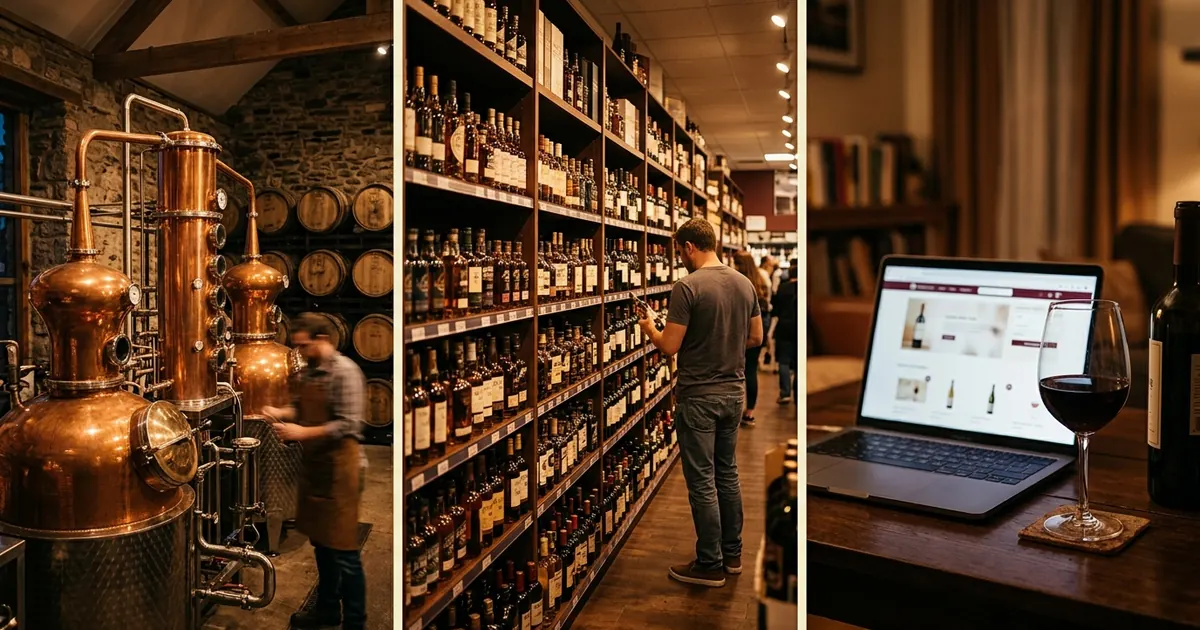
AI search is changing how consumers discover wine shops, liquor stores, breweries, wineries, spirits, and alcohol brands. Instead of browsing several search results, consumers can now ask conversational questions such as “What wine pairs well with seafood?”, “What whiskey is good for beginners?”, or “Where can I find a liquor store near me?” and receive summarized answers.
For alcohol businesses, this creates a new opportunity beyond traditional keyword rankings. AI search optimization combines technical SEO, helpful content, local search signals, structured information, and authoritative answers that search engines and AI-powered systems can understand.
This is where Answer Engine Optimization (AEO) and Generative Engine Optimization (GEO) become increasingly relevant. AEO focuses on providing clear, direct answers to user questions, while GEO focuses on making brand information useful, authoritative, and understandable within generative search experiences.
The objective is not to find a shortcut to appear in AI-generated answers. Instead, alcohol brands should build websites that provide accurate, trustworthy, well-structured, and genuinely useful information for both consumers and modern search systems.
How AI Search Is Changing Alcohol SEO
Traditional search often begins with a short keyword such as:
- wine shop near me
- best whiskey
- buy red wine
- liquor store
- craft beer
AI-powered search is increasingly conversational. Users can provide context, preferences, location, occasion, budget, and specific requirements within a single question.
For example:
“What red wine should I choose for a dinner with steak?”
or:
“What are some good whiskey options for someone who is just starting to explore whiskey?”
This shift means alcohol brands need to think beyond individual keywords and understand the intent behind a search.
A strong alcohol SEO strategy should therefore combine:
- Search-intent-focused content
- Helpful product information
- Educational resources
- Local SEO
- Technical SEO
- Structured information
- Conversational answers
- Strong brand signals
- Authoritative and trustworthy content
The key change is simple: SEO is no longer only about ranking for a keyword. It is about becoming a useful source of information throughout the customer's search journey.
Why Traditional SEO Still Matters in AI Search?
AI search does not make traditional SEO irrelevant.
Search engines and AI-powered experiences still depend on websites that can be discovered, crawled, interpreted, and evaluated. Technical SEO therefore remains an important foundation for AI-search visibility.
Alcohol businesses should continue focusing on:
- Website crawlability and indexation
- Logical site architecture
- Internal linking
- Mobile usability
- Page performance
- High-quality content
- Relevant backlinks and mentions
- Local SEO
- Accurate business information
- Structured data where appropriate
- Clear product and category pages
AEO and GEO should therefore be viewed as extensions of a strong SEO strategy rather than replacements for it.
A technically weak website with poor information is unlikely to become a strong source simply because it has added FAQs or conversational keywords.
How Consumers Are Using AI to Search for Alcohol
Understanding search intent is one of the most important parts of modern alcohol SEO.
1. Discovery Searches
Consumers may ask:
- “What are the best wines for a dinner party?”
- “What type of whiskey should beginners try?”
- “What are popular craft beer styles?”
These searches require educational and recommendation-oriented content.
2. Comparison Searches
Examples include:
- “Bourbon vs Scotch for beginners”
- “Cabernet Sauvignon vs Merlot”
- “Champagne vs Prosecco”
Comparison guides can help consumers understand differences before making a purchase.
3. Local Searches
Consumers may ask:
- “Where can I buy wine near me?”
- “What liquor stores are open near me?”
- “Where can I find craft beer in [city]?”
For these searches, local SEO and accurate business information become particularly important.
4. Buying Searches
Examples:
- “What tequila is best for margaritas?”
- “Best wine for a wedding gift”
- “What whiskey should I buy as a gift?”
Useful buying guides can help brands address these decision-making searches.
5. Educational Searches
Consumers may also ask:
- “How should red wine be stored?”
- “What is the difference between bourbon and whiskey?”
- “What glass should I use for different cocktails?”
Educational content helps brands establish topical relevance beyond individual product pages.
What Is GEO for Alcohol Brands?
Generative Engine Optimization (GEO) refers to optimizing a brand's digital presence so its information can be better understood and potentially surfaced or referenced in generative search experiences.
For alcohol brands, GEO is less about repeating specific keywords and more about developing a consistent, authoritative information ecosystem.
Effective GEO strategies can include:
- Publishing original and useful educational content
- Creating comprehensive topic coverage
- Providing accurate product information
- Building detailed buying guides
- Answering frequently asked consumer questions
- Maintaining consistent brand information
- Strengthening topical authority
- Improving website structure
- Building reputable external mentions
- Keeping content accurate and updated
For example, a wine brand should not only have a product page saying that a particular wine is “premium” or “high quality.”
It can also provide useful information about:
- Grape variety
- Region
- Flavor profile
- Food pairing
- Serving recommendations
- Storage
- Production methods
- Brand history
This provides more context for both consumers and search systems.
There is no guaranteed method for making a brand appear in an AI-generated answer. GEO should instead focus on making the brand's information accurate, accessible, useful, and authoritative.
What Is AEO for Alcohol Businesses?
Answer Engine Optimization (AEO) focuses on creating content that directly and clearly answers questions users ask through search engines and AI-powered answer systems.
Instead of writing primarily around keywords, AEO encourages brands to structure content around questions, answers, entities, and search intent.
For example:
User question:
What wine pairs well with seafood?
Promotional answer:
We offer premium wines from around the world at competitive prices.
This doesn't directly answer the question.
Answer-focused content:
Sauvignon Blanc, Pinot Grigio, and unoaked Chardonnay are commonly paired with seafood because their acidity complements many lighter fish and shellfish dishes.
The second answer is more useful because it directly addresses the user's question.
Alcohol businesses can apply this approach to questions about:
- Wine pairings
- Spirit categories
- Beer styles
- Cocktail ingredients
- Serving recommendations
- Storage
- Product differences
- Gifting
- Local availability
- Responsible consumption
How Wine Brands Can Improve Visibility in AI Search
Wine consumers often research products before making a purchase. They may want to understand the grape variety, region, flavor profile, food pairing, serving temperature, or differences between similar wines.
Wine brands can build stronger search visibility by creating useful content around these topics.
For example, a wine website could create content covering:
Wine education
- Cabernet Sauvignon explained
- Understanding Pinot Noir
- Guide to Chardonnay
- Popular wine regions
Food pairing
- Wine for seafood
- Wine for steak
- Wine for pasta
- Wine for cheese
Buying guidance
- Wine for beginners
- Wine for dinner parties
- Wine gifting guide
- Wine selection by occasion
Storage and serving
- How to store wine
- How to serve red wine
- Ideal wine serving temperatures
- How long different wines last after opening
This creates a broader topical ecosystem around the brand instead of relying solely on product pages.
Local SEO and AI Search for Liquor Stores
Local discovery is especially important for liquor stores, wine shops, breweries, and other location-based alcohol businesses.
A consumer asking:
“Where can I buy wine near me?”
may need information about businesses, locations, hours, services, reviews, and availability.
Liquor stores should therefore maintain accurate information across their digital presence, including:
- Business name
- Address
- Phone number
- Opening hours
- Website
- Location pages
- Business categories
- Services
- Store descriptions
- Customer reviews
- Relevant local content
A dedicated location page can also answer practical questions such as:
- Where is the store located?
- What products or categories does it offer?
- What are its opening hours?
- Does it offer pickup or delivery where legally available?
- Which areas does it serve?
For alcohol retailers, local SEO remains an essential part of AI-search readiness because many consumer searches have strong local intent.
What Should Alcohol Brands Optimize for AI Search?
Different website assets serve different search intents.
| Website Asset | What to Optimize |
|---|---|
| Product pages | Product details, characteristics, serving information |
| Category pages | Clear classifications and useful buying guidance |
| FAQ pages | Direct answers to genuine customer questions |
| Blog content | Educational and informational topics |
| Buying guides | Comparisons, use cases and selection criteria |
| Local pages | Location, hours and relevant services |
| Cocktail recipes | Ingredients, measurements and preparation |
| Wine guides | Varietals, regions, pairings and serving |
| About pages | Brand history, expertise and business information |
| Contact pages | Accurate business and location information |
The goal is to make important information clear, structured, accessible, and useful.
10 Ways to Optimize an Alcohol Website for AI Search
1. Answer Real Customer Questions
Build content around the questions your customers actually ask.
Instead of creating an article simply because a keyword has search volume, consider the complete information need behind that keyword.
2. Create Detailed Product Pages
Product pages should provide more than a product name and price.
Where appropriate, include useful details such as:
- Product type
- Brand
- Origin
- Flavor or tasting profile
- Serving suggestions
- Food pairing
- Available sizes
- Relevant product characteristics
Accurate information gives search systems greater context about the product.
3. Build Topic Clusters
Create connected content around important subjects.
For example:
Wine
→ Wine types → Wine regions → Wine pairing → Wine storage → Wine serving → Wine buying guides
This approach can help establish broader topical relevance.
4. Use Clear Headings
Structure content around meaningful questions and topics.
Instead of:
“Our Recommendations”
consider:
“What Wine Pairs Best With Seafood?”
Clear headings help readers and search systems understand the purpose of each section.
5. Strengthen Local SEO
For liquor stores and other location-based businesses, optimize local business information and location-specific content.
Keep important business details accurate and consistent.
6. Maintain Consistent Brand Information
Your brand name, products, locations, services, descriptions, and other important information should be accurate and consistent across your website and reputable external sources.
Inconsistent information can create confusion for consumers and search systems.
7. Use Appropriate Structured Data
Structured data can help search engines better understand eligible information on a webpage.
However, markup should accurately represent visible page content and should not be treated as a shortcut for AI visibility.
8. Demonstrate Expertise
Alcohol-related content should prioritize factual accuracy and useful expertise.
Depending on the topic, this can include:
- Expert commentary
- Original research
- Qualified contributors
- Credible references
- First-hand experience
- Accurate product information
9. Keep Content Updated
Alcohol products, businesses, regulations, availability, trends, and consumer preferences can change.
Review important content periodically and update outdated information.
10. Measure More Than Rankings
Traditional rankings remain useful, but businesses should also consider:
- Organic traffic
- Search impressions
- Branded searches
- Local visibility
- Engagement
- Conversions
- Content-assisted conversions
- Referral traffic
- AI-search visibility signals where measurable
AI search should be treated as part of the wider search ecosystem rather than a completely separate channel.
Best Content Types for Alcohol SEO, AEO and GEO
A strong alcohol content strategy should cover different stages of the consumer journey.
Educational Content
- What is bourbon?
- Types of wine
- Understanding whiskey aging
- How to store wine
- Different beer styles
Buying Guides
- Best wine for dinner parties
- Wine gifting guide
- Whiskey buying guide for beginners
- Choosing spirits for cocktails
Comparison Content
- Bourbon vs whiskey
- Pinot Noir vs Cabernet Sauvignon
- Champagne vs Prosecco
- Scotch vs bourbon
Recipe Content
- Margarita recipe
- Old Fashioned recipe
- Wine-based cocktails
- Classic cocktail guides
Local Content
- Wine shops in [city]
- Liquor store guide for [city]
- Brewery guide for [city]
- Local alcohol shopping guides
Seasonal Content
- Christmas wine guide
- New Year's Eve drinks
- Wedding alcohol planning
- Holiday alcohol gifting
- Summer cocktail guides
This content can also create valuable internal-linking opportunities between informational, commercial, and local pages.
Common AI SEO Mistakes Alcohol Brands Should Avoid
As AI search evolves, brands should avoid treating GEO and AEO as keyword-stuffing exercises.
Common mistakes include:
Keyword stuffing
Repeating phrases such as “GEO for alcohol brands” or “AI SEO for alcohol brands” throughout every paragraph can make content unnatural.
Publishing generic AI-generated content
AI tools can help with content production, but publishing large amounts of generic content without expert review can reduce usefulness and credibility.
Making guaranteed AI visibility claims
No legitimate optimization strategy can guarantee that a brand will appear in a ChatGPT, Gemini, Google AI Overview, or another AI-generated response.
Creating hundreds of similar location pages
Location pages should provide genuinely useful local information rather than simply swapping city names into the same template.
Ignoring technical SEO
Good content cannot compensate for major crawlability, indexation, performance, or site-architecture problems.
Optimizing for AI instead of people
The strongest strategy is to create content that helps users first and makes that information easy for search systems to understand.
How NSP Global Services Helps Alcohol Brands Adapt to AI Search
NSP Global Services helps alcohol businesses develop search strategies designed for both traditional and AI-powered discovery.
Our approach combines technical SEO, content strategy, local SEO, AEO, and GEO principles to create useful digital experiences for consumers searching for wine, spirits, beer, breweries, wineries, and related products.
Rather than relying on keyword repetition, we focus on:
- Search intent
- Topical authority
- Helpful content
- Structured information
- Accurate product information
- Local search optimization
- Conversational content
- Consistent brand signals
From product and category pages to educational guides, FAQs, local landing pages, and content strategies, the objective is simple: make the right information easy for customers and search systems to understand.
Conclusion: Build an Alcohol Brand That AI Can Understand
AI search is changing how consumers discover information about wine, beer, spirits, breweries, wineries, and liquor stores, but it does not make traditional SEO irrelevant. Instead, it expands the ways brands can become visible throughout the customer journey.
Successful alcohol SEO in 2026 requires a combination of technical SEO, helpful content, local search optimization, structured information, AEO, and GEO.
Brands should focus on answering real customer questions, demonstrating expertise, maintaining accurate product and business information, and creating content that provides genuine value.
There is no guaranteed formula for appearing in an AI-generated answer. However, alcohol businesses can strengthen their overall search presence by becoming a reliable source of information that search engines, AI systems, and customers can understand and trust.
The future of alcohol search is not simply about ranking first. It is about becoming a useful source throughout the customer's discovery, research, and decision-making journey.
Explore our Liquor & Alcohol SEO Services
Alcohol SEO Services | Digital Marketing Services for Alcohol | Digital Marketing Services for Online Alcohol Stores | Alcoholic Beverage Wholesaler SEO Services | Alcohol Retail Monopoly SEO Services .
Frequently Asked Questions
How is AI search changing alcohol SEO?
AI search is making search more conversational and answer-focused. Consumers can ask detailed questions and receive summarized responses, increasing the importance of useful, authoritative, and well-structured content.
What is AI search optimization for alcohol brands?
AI search optimization involves improving a brand's technical SEO, content, local presence, structured information, and authority so search engines and AI-powered systems can better understand and discover its information.
What is GEO for alcohol brands?
GEO, or Generative Engine Optimization, focuses on creating useful, authoritative, and well-structured information that can be understood and potentially surfaced or referenced in generative search experiences.
What is AEO for alcohol businesses?
AEO, or Answer Engine Optimization, focuses on creating clear, direct answers to questions consumers ask through search engines and AI-powered answer systems.
How can a liquor store improve its visibility in AI search?
A liquor store can strengthen its search visibility by maintaining accurate local business information, optimizing product and category pages, answering customer questions, publishing useful content, and building a strong local SEO presence.
How can wine brands optimize their websites for AI search?
Wine brands should publish useful information about varietals, regions, tasting profiles, food pairings, serving, storage, and brand history while maintaining accurate and consistent information across their digital presence.
Can SEO help a brand appear in ChatGPT or other AI-generated answers?
Traditional SEO can support overall website discoverability, but there is no guaranteed method for making a brand appear in ChatGPT or another AI-generated response.
What content works best for alcohol SEO and GEO?
Useful content can include buying guides, product information, wine and spirit education, food-pairing guides, cocktail recipes, comparisons, FAQs, local guides, and responsible-consumption information.
Is traditional SEO still important for alcohol brands?
Yes. Technical SEO, crawlability, indexation, site structure, content quality, authority, and local SEO remain important foundations for online visibility as search becomes increasingly AI-driven.
How should alcohol brands measure AI search optimization?
Brands should monitor organic visibility, branded searches, local performance, engagement, conversions, content performance, and available AI-search referral or visibility signals rather than relying on a single AI ranking metric.

Nishi Singh
(Content Writer & SEO Manager)
NSP Global Services is a leading digital marketing agency specialising in SEO, content strategy, and paid advertisements — helping businesses across SaaS, B2B, and e-commerce achieve measurable growth online.
Posted on: Sep 10, 2026