

Wine SEO / Brand Discovery
How Do People Find New Wine Brands Online? A Complete Digital Discovery Guide
Written By Nishi Singh • Last Update Oct 2, 2026
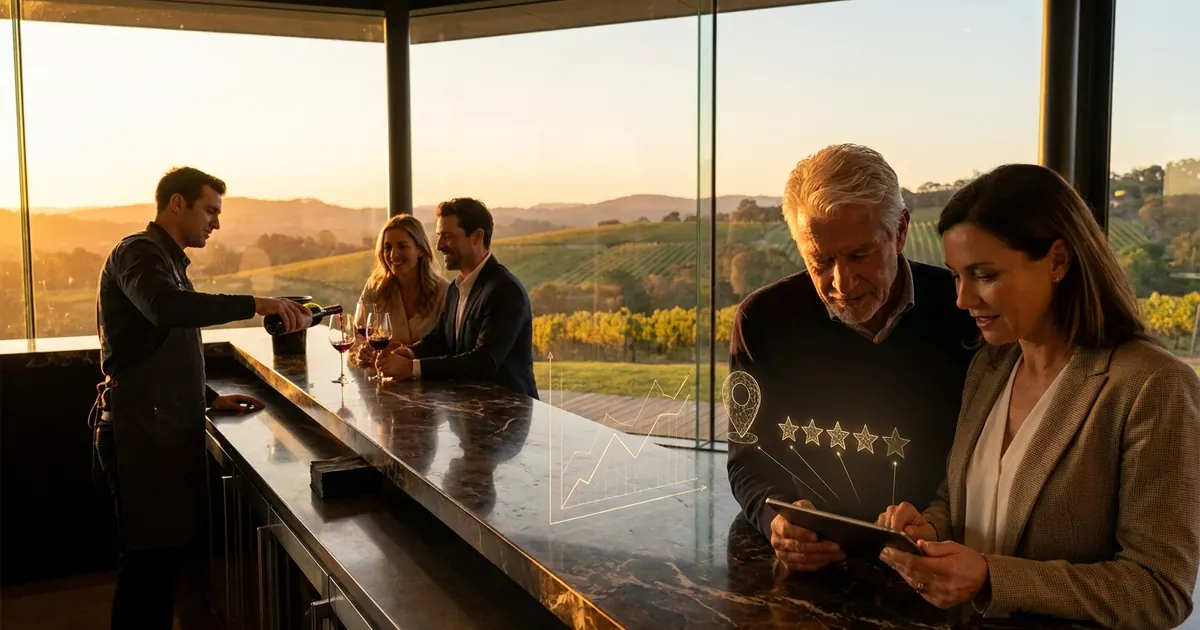
Consumers rarely discover a new wine brand by searching for the brand name first. More often, the journey starts with a question, recommendation, wine variety, region, food pairing, review, social media post, or creator recommendation.
So, how do people find new wine brands online? Consumers typically discover wine brands through Google Search, social media, wine reviews, influencers and creators, online retailers, educational content, recommendations, and increasingly, AI-powered search.
For wineries and wine retailers, this means online visibility cannot depend only on a branded website or product page. A strong wine SEO and digital discovery strategy should help potential customers find useful information at different stages of their research journey.
At NSP Global Services, our approach focuses on understanding what consumers search for, what information they need, and where they look for it before discovering or evaluating a wine brand.
At a Glance: How Do Consumers Discover Wine Brands Online?
Consumers discover new wine brands through several digital channels:
- Google Search – People search for wine varieties, regions, recommendations, pairings, reviews, and products.
- Social Media – Videos, tastings, food pairings, winery stories, and visual content introduce brands to new audiences.
- Wine Reviews – Reviews and ratings help consumers evaluate unfamiliar wines.
- Influencers and Creators – Wine creators can introduce brands through tastings, recommendations, and educational content.
- Online Retailers – Consumers discover brands while browsing wine categories, recommendations, and product listings.
- Educational Content – Wine guides can answer questions and introduce consumers to brands earlier in their journey.
- AI-Powered Search – Consumers increasingly ask conversational questions and use AI-powered search experiences to research products and recommendations.
The strongest wine discovery strategy connects these channels instead of treating them as separate marketing activities.
How Do People Find New Wine Brands Online?
The online wine discovery journey can begin in many different ways.
A consumer might search:
- “Best wine for dinner”
- “Italian wine brands”
- “Best red wine for steak”
- “Cabernet Sauvignon wine brands”
- “Wine from Tuscany”
- “Wine for a special occasion”
- “Best wine for pasta”
- “Wine tasting near me”
In these situations, the consumer may not have a particular brand in mind.
This creates an important opportunity for wineries. Instead of focusing exclusively on searches containing the brand name, businesses can create useful content around the questions, interests, and problems consumers have before they discover a specific wine brand.
A typical discovery journey could look like:
Search → Discover → Research → Compare → Validate → Find Where to Buy → Purchase
At each stage, different digital channels can influence the consumer.
7 Digital Channels That Help Consumers Discover Wine Brands
1. Google Search
Google remains an important channel for consumers researching wine.
People may use search engines to find:
- Wine recommendations
- Wine varieties
- Grape varieties
- Wine regions
- Food pairings
- Wine reviews
- Tasting notes
- Winery information
- Online wine retailers
- Where to buy a particular wine
For example, someone searching for “best wine for pasta” may discover an educational article, a wine retailer, a wine publication, or a specific wine brand.
This is why wine SEO should go beyond branded keywords.
Wineries can create content that addresses informational, commercial, product, and local search intent. This allows the brand to become visible before consumers already know what they want to buy.
Example of different wine search intents
| Search Intent | Example Query | Suitable Content |
|---|---|---|
| Informational | What wine goes with pasta? | Food-pairing guide |
| Commercial | Best Italian red wines | Comparison or list article |
| Product | Cabernet Sauvignon wine | Product/category page |
| Local | Winery near me | Local SEO page |
| Review | [Brand] wine review | Brand/product content |
| Branded | [Brand] wine | Brand or product page |
A well-planned SEO strategy connects these different search journeys to relevant pages on the website.
2. Social Media
Social media can help wine brands reach people who are not actively searching for a particular wine.
Tasting videos, food-pairing content, winery stories, educational posts, behind-the-scenes content, and visually engaging product content can generate awareness and curiosity.
For example, a consumer may see a wine-pairing video on Instagram or another social platform. They may then search Google for the featured brand to learn more about its products, reviews, origin, or availability.
This creates a relationship between social discovery and search discovery.
Social media can generate the initial interest, while a well-optimized website provides the information consumers need during further research.
3. Wine Reviews and Publications
Wine reviews can be particularly useful when consumers are considering an unfamiliar brand.
Before purchasing, consumers may look for:
- Wine ratings
- Tasting notes
- Expert opinions
- Customer reviews
- Wine publications
- Food-pairing recommendations
- Information about the winery
- Grape variety and region
Independent reviews, retailer reviews, credible wine publications, and knowledgeable reviewers can help consumers evaluate a wine they have not purchased before.
However, wineries should not rely entirely on third-party websites.
Their own websites should make important product information easy to find, including:
- Wine variety
- Grape composition
- Region of origin
- Vintage, where relevant
- Tasting notes
- Food pairings
- Bottle size
- Winery information
- Availability or retailer information
This allows consumers to verify the information they discover elsewhere.
4. Influencers and Content Creators
Influencers and wine creators can introduce brands to audiences that may not discover them through traditional search.
A creator might feature a wine through:
- A tasting
- Food pairing
- Educational video
- Wine recommendation
- Winery visit
- Product review
- Lifestyle content
When viewers find the content useful, they may search for the wine brand themselves.
For example:
Creator recommendation → Google search → Brand website → Reviews → Product information → Retailer
This is why influencer marketing should not be viewed as an isolated activity.
If consumers discover a brand through a creator but cannot find reliable information about that brand online, the discovery journey can become fragmented.
Strong SEO and informative website content can help capture this additional search demand.
5. Online Wine Retailers
Online wine retailers are another important discovery channel.
Consumers may browse retailer websites based on:
- Wine type
- Grape variety
- Country
- Region
- Price
- Rating
- Food pairing
- Occasion
- Wine style
A consumer who has never heard of a particular wine brand may discover it while browsing a retailer's category page or recommendation section.
For wine businesses, maintaining accurate and consistent product information across relevant retail platforms can therefore support broader brand visibility.
Retailer visibility can also complement the brand's own SEO strategy by providing additional pathways for consumers to discover products.
6. Educational Wine Content
Educational content can introduce consumers to a wine brand before they have strong purchase intent.
Useful topics may include:
- Wine and food pairing
- Wine varieties
- Grape varieties
- Wine regions
- Wine tasting guides
- How to choose wine
- Wine terminology
- Wine storage
- Wine styles
- Beginner's wine guides
For example, a consumer searching for “what wine pairs with grilled food” may discover an educational article.
If that article provides useful information and naturally connects to relevant wines, the consumer has an opportunity to discover the brand as part of the research process.
This is why content marketing, and SEO can work together to capture consumers earlier in the buying journey.
7. AI-Powered Search
The way people discover information online is also changing as consumers increasingly use conversational and AI-powered search experiences.
Instead of searching only for:
“Italian wine brands”
a consumer may ask:
“What Italian wine brands pair well with pasta?”
Or:
“What type of red wine is suitable for a dinner party?”
These conversational searches create new opportunities for wine brands to provide useful, authoritative information.
For this reason, Generative Engine Optimization (GEO) and Answer Engine Optimization (AEO) are becoming relevant to modern wine SEO strategies.
Wine websites should provide clear answers, useful explanations, structured information, relevant FAQs, and consistent product details that search engines and AI systems can understand.
Does Google Help Consumers Discover New Wine Brands?
Yes. Google can help consumers discover new wine brands through informational, commercial, product, and local searches.
A consumer may start with a general question about wine and eventually discover a specific brand.
For example:
“Best wine for steak” → “Cabernet Sauvignon” → “Best Cabernet Sauvignon brands” → Wine reviews → Product search
This means wineries have an opportunity to appear at multiple stages of the discovery journey.
A strong SEO strategy should therefore not focus only on:
“[Brand Name] wine”
It should also target relevant non-branded searches related to:
- Wine varieties
- Grape varieties
- Wine regions
- Food pairings
- Wine recommendations
- Tasting notes
- Wine education
- Product categories
- Buying questions
This approach can help wineries reach consumers before they have already selected a brand.
How Does SEO Help a Winery Get Discovered?
SEO helps wineries become visible when potential customers search for information related to their products, expertise, location, and wine categories.
A winery can strengthen its search visibility by focusing on several areas.
1. Search Intent Research
Identify the questions and searches consumers use before they discover the brand.
2. Useful Content
Create genuinely helpful articles and guides around wine varieties, regions, pairings, tasting notes, buying advice, and related topics.
3. Product Page Optimization
Optimize product pages with clear descriptions, relevant information, useful headings, FAQs, and appropriate structured data.
4. Internal Linking
Connect educational content to relevant product, category, winery, and service pages.
For example:
Wine variety guide → Food pairing guide → Relevant wine category → Product page
5. Technical SEO
Make sure important pages can be crawled, indexed, and understood by search engines.
6. Authority and Digital PR
Relevant backlinks, publications, reviews, expert mentions, and digital PR can help strengthen a website's authority.
7. Local SEO
Wineries with physical locations, tasting rooms, tours, or visitor experiences should also consider local search optimization.
8. AEO and GEO
Create direct answers to common questions and organize content so that search engines and AI-powered systems can understand the information efficiently.
How Can a Winery Improve Its Visibility on Google?
A practical winery SEO strategy can start with the following steps:
Step 1: Identify Consumer Questions
Research what potential customers search before they know your brand.
Step 2: Build Topic Clusters
Create groups of related content around wine varieties, regions, food pairings, tasting, buying advice, and products.
Step 3: Optimize Existing Pages
Improve product, category, location, and brand pages instead of creating new content unnecessarily.
Step 4: Strengthen Internal Links
Connect relevant informational content with commercial and product pages.
Step 5: Improve Search Experience
Make content easy to scan using clear headings, short paragraphs, tables, lists, definitions, and FAQs.
Step 6: Build Credibility
Support important claims with trustworthy sources and demonstrate relevant expertise.
Step 7: Optimize for AI Search
Provide concise answers to conversational questions while maintaining detailed supporting information underneath.
How Can Wine Brands Optimize for AI Search?
AI-powered search systems need to understand what a website, brand, product, and topic represent.
Wine brands can make their content more accessible to these systems by following several best practices.
1. Provide Direct Answers
Answer the main question early rather than making readers search through several paragraphs.
For example:
Consumers discover new wine brands through Google, social media, wine reviews, influencers, online retailers, educational content, and AI-powered search.
Then provide additional details below the answer.
2. Use Clear Headings
Use descriptive headings such as:
- How do people find new wine brands online?
- How does Google help consumers discover wine?
- How important are wine reviews?
- How can wineries improve Google visibility?
This makes the content easier for both users and search systems to understand.
3. Create Question-Based Content
Address natural-language questions consumers may ask.
Examples include:
- How do I choose a wine for dinner?
- What wine pairs with pasta?
- How do I find a good wine brand?
- What are popular wine varieties?
- How can I learn about a wine before buying it?
4. Provide Structured Information
Use tables, lists, FAQs, product information, and other clearly organized content where appropriate.
5. Maintain Consistent Brand Information
Keep information about the winery, products, wine varieties, regions, and availability consistent across the website and other relevant online platforms.
What Does a Strong Online Wine Discovery Strategy Look Like?
There is no single channel responsible for wine brand discovery.
Instead, consumers may interact with several channels throughout their journey.
A strong digital discovery strategy can be visualized as:
Search → Awareness → Research → Trust → Evaluation → Purchase
Each channel can contribute differently:
| Digital Channel | Primary Role |
|---|---|
| Google Search | Captures existing search demand |
| Social Media | Builds awareness and curiosity |
| Wine Reviews | Provides validation |
| Influencers | Introduces brands to relevant audiences |
| Educational Content | Answers consumer questions |
| Online Retailers | Supports product discovery |
| AI Search | Provides conversational answers and recommendations |
The goal is to ensure that consumers can discover and research the brand regardless of where their journey begins.
Why Wine SEO Should Go Beyond Brand Keywords?
One of the biggest opportunities for wineries is to move beyond branded searches.
Someone searching for a winery by name has already discovered the brand.
The larger SEO opportunity can be found in searches such as:
“best wine for pasta”
“Cabernet Sauvignon wine brands”
“Italian wines for dinner”
“wine pairing for steak”
“how to choose a red wine”
These searches can reach potential customers earlier in their journey.
By creating useful content around relevant topics and connecting that content to commercial pages, wineries can build a broader search presence.
The Future of Online Wine Discovery
Wine discovery is becoming increasingly fragmented across search engines, social platforms, retailer websites, reviews, creators, and AI-powered search.
Consumers may see a brand on social media, search for reviews on Google, ask an AI assistant for more information, visit the winery's website, and then look for a retailer.
This means wine businesses need to think beyond individual marketing channels.
The future of wine discovery is likely to depend increasingly on being visible wherever consumers ask questions, compare products, seek recommendations, and validate information.
For wineries, this makes integrated SEO, content marketing, digital PR, social media, local SEO, AEO, and GEO increasingly valuable.
Conclusion
How do people find new wine brands online? They discover them through a combination of Google searches, social media, wine reviews, influencers, online retailers, educational content, recommendations, and AI-powered search.
The discovery journey rarely follows a single path.
A consumer may begin with a question about a wine variety, discover a brand through an article, see it mentioned by a creator, read reviews, visit a product page, and then look for a retailer.
For wineries and wine businesses, the opportunity is to build visibility throughout this journey.
A strong wine digital marketing strategy should therefore combine wine SEO, search-intent-focused content, optimized product pages, internal linking, technical SEO, local visibility, digital PR, reviews, AEO, and GEO.
At NSP Global Services, we help brands develop search-focused digital strategies designed to improve visibility across traditional search and emerging AI-powered discovery experiences.
The objective is simple: help the right customers discover your wine brand when they are searching, researching, comparing, and ready to take the next step.
Frequently Asked Questions
1. How do people find new wine brands online?
Consumers discover new wine brands through Google searches, social media, wine reviews, influencers, online retailers, recommendations, educational content, and AI-powered search. Many discovery journeys involve several of these channels rather than just one.
2. What is the most common way consumers discover wine brands online?
Search engines are an important discovery channel because consumers can actively search for wine varieties, regions, recommendations, food pairings, reviews, and products. Social media, reviews, influencers, and retailer websites also contribute to discovery.
3. Do people use Google to find new wine brands?
Yes. Consumers use Google to research wine varieties, brands, regions, tasting notes, food pairings, reviews, prices, and buying options. This makes SEO valuable for wineries that want to reach consumers before they already know their brand.
4. How can a winery get discovered on Google?
A winery can improve Google visibility by targeting relevant search terms, creating useful wine-related content, optimizing product pages, improving technical SEO, strengthening internal links, building relevant authority, and optimizing for local and conversational searches.
5. How does social media help wine brands get discovered?
Social media introduces wine brands to people who may not be actively searching for a particular product. Tasting videos, food-pairing ideas, creator content, winery stories, and educational posts can generate awareness and encourage consumers to search for more information.
6. How important are wine reviews for brand discovery?
Wine reviews can help consumers evaluate unfamiliar brands by providing information about taste, quality, style, and overall experience. Customer reviews, retailer reviews, wine publications, and credible reviewers can all contribute to the discovery process.
7. Do influencers help consumers discover new wine brands?
Yes. Wine influencers and creators can introduce brands to relevant audiences through tastings, recommendations, food pairings, reviews, and educational content. Viewers who become interested may then search for the featured brand.
8. How can wine brands optimize for AI search?
Wine brands can optimize for AI search by publishing authoritative and useful content that directly answers consumer questions. Clear headings, concise answers, FAQs, structured information, relevant internal links, and consistent brand and product information can make content easier for AI-powered search systems to understand.
9. What keywords should wineries target for SEO?
Wineries should target a combination of informational, commercial, product, local, and branded keywords. Relevant topics can include wine varieties, grape varieties, wine regions, food pairings, wine recommendations, tasting notes, buying questions, and location-based searches.
10. Why is wine SEO important for brand discovery?
Wine SEO helps wineries appear when potential customers search for information related to wine before they know which brand they want to purchase. By targeting relevant search intent, wineries can create opportunities to introduce their brands earlier in the consumer journey.

Nishi Singh
(Content Writer & SEO Manager)
NSP Global Services is a leading digital marketing agency specialising in SEO, content strategy, and paid advertisements — helping businesses across SaaS, B2B, and e-commerce achieve measurable growth online.
Posted on: Oct 2, 2026