

AI Search / Alcohol Brands
How to Make Your Wine, Beer or Spirits Brand Appear in ChatGPT Recommendations
Written By Nishi Singh • Last Update Oct 2, 2026
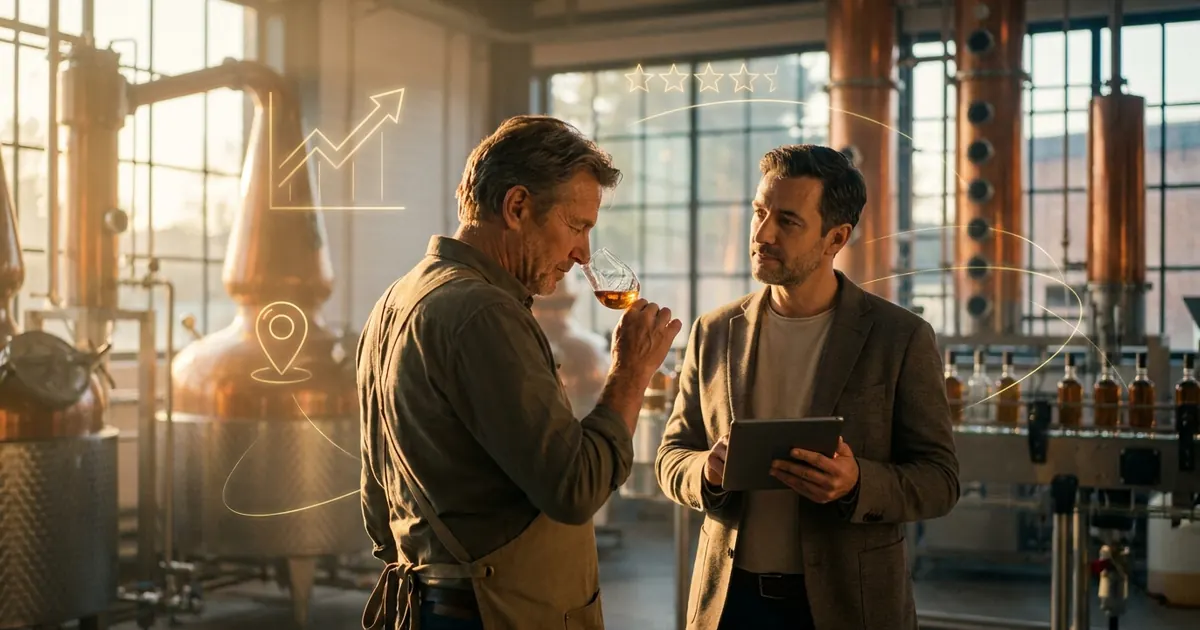
Consumers are changing the way they discover brands. Instead of searching Google for a generic term and opening several websites, they can now ask AI-powered search tools highly specific questions such as, “Which wine brands are best for beginners?”, “What craft beer brands should I try?” or “Which spirits are good for cocktails?”
This shift is making ChatGPT SEO, Generative Engine Optimization (GEO) and Answer Engine Optimization (AEO) increasingly relevant for wine, beer and spirits brands.
However, there is no secret formula that guarantees a brand will appear in a ChatGPT recommendation. AI-powered search systems use information from the web to understand questions and formulate answers, while the specific brands mentioned can vary depending on the query, available information, and search results.
For alcohol brands, the goal should therefore not be to “rank in ChatGPT” through keyword stuffing. Instead, brands should build a strong, accessible and credible digital presence that clearly communicates who they are, what they offer and why their products are relevant.
At NSP Global Services, we approach AI search optimization for alcohol brands as an extension of traditional SEO, content marketing and digital PR.
How Can a Wine, Beer or Spirits Brand Appear in ChatGPT?
A wine, beer or spirits brand can improve its chances of being discovered in ChatGPT by maintaining a technically accessible website, publishing detailed product information, creating useful educational content, keeping brand information consistent across the web and earning credible third-party mentions.
Brands should also ensure that relevant public website content can be accessed by search crawlers. OpenAI recommends that website owners who want their content to be discoverable in ChatGPT Search allow OAI-SearchBot to crawl their websites.
No individual SEO, GEO or content tactic guarantees that ChatGPT will recommend a particular brand. The objective is to create a reliable digital footprint that gives AI-powered search systems useful information to understand the brand and its products.
What Makes an Alcohol Brand Visible in ChatGPT?
ChatGPT visibility depends on more than simply having a website or mentioning a brand name multiple times.
For wine, beer and spirits companies, several elements can contribute to a stronger online presence:
- A technically accessible and crawlable website
- Detailed product pages
- Clear brand and company information
- Useful educational content
- Consistent product information across the web
- Credible third-party mentions
- Reviews and editorial coverage
- Industry publications and directories
- Awards and certifications where applicable
- Strong internal linking and website structure
- Content that directly answers customer questions
Think of these elements as pieces of the same digital ecosystem.
For example, a wine brand may have a product page describing a Cabernet Sauvignon, an educational article explaining Cabernet Sauvignon, an industry publication reviewing the wine and a retailer listing the same product. When important information is consistent across these sources, it becomes easier for search systems to understand the brand, product and relevant entities.
How Does ChatGPT Find Wine, Beer and Spirits Brands?
When ChatGPT Search is used, it can retrieve information from the web and use relevant sources to formulate an answer.
This means that ChatGPT search optimization should extend beyond a brand's homepage.
A spirits producer, for example, should provide detailed information about its products, including relevant details such as:
- Spirit category
- Product name
- Country or region of origin
- Production method
- Ingredients where appropriate
- Tasting characteristics
- Age statement where applicable
- Alcohol by volume (ABV)
- Bottle size
- Awards
- Serving recommendations
- Food pairings
- Availability information
Similarly, wine brands can provide information about grape varieties, appellation or region, vintage, tasting notes, food pairings, and production approach.
Beer brands can provide information about beer style, brewing approach, flavour profile, ingredients where appropriate, ABV and suggested food pairings.
The objective is to give customers—and search systems—clear, specific and useful information.
Does Traditional SEO Still Matter for ChatGPT?
Yes. Traditional SEO still matters.
GEO should not be treated as a replacement for search engine optimization. A technically sound website, useful content, good site architecture and authoritative external mentions can support visibility across both traditional and AI-powered search experiences.
Traditional SEO helps search engines discover, crawl and understand webpages. GEO and AEO build on those foundations by focusing more heavily on conversational questions, entities, context and answer-ready information.
For example, a traditional SEO strategy might target:
“best craft beer brands”
An AEO and GEO strategy can also address conversational queries such as:
“What craft beer brands are worth trying for someone who enjoys hoppy beers?”
The strongest strategy is to create content that can satisfy both types of search intent.
How to Optimize Your Website for AI Search
1. Make Important Pages Crawlable
Your important product, category, informational and company pages should be accessible to search crawlers.
Check technical elements such as:
- Robots.txt
- XML sitemap
- Internal links
- Canonical tags
- Page accessibility
- Mobile usability
- Website speed
- Indexability
If you want content to be discoverable in ChatGPT Search, review whether your website permits OAI-SearchBot to access relevant public pages.
2. Create Detailed Product Pages
Product pages should provide more than a product name and a short sales description.
A strong wine, beer or spirits product page can include:
A. Product name:
Clearly identify the product and brand.
B. Category:
Explain whether it is wine, beer, whisky, gin, rum, vodka or another beverage category.
C. Origin:
Mention the country, state, region, appellation or production location where relevant.
D. Product characteristics:
Describe flavour, aroma, style, body or other relevant characteristics.
E. Production information:
Explain the production or brewing approach where useful.
F. Serving information:
Include serving suggestions, food pairings or cocktail applications where appropriate.
G. Availability:
Provide accurate information about where the product can be purchased or distributed.
This creates a much richer information source for users and search systems.
What Content Should Wine, Beer and Spirits Brands Publish?
Product pages are important, but they should not be the only valuable content on an alcohol brand's website.
Brands should build a library of useful resources that answers the questions their target customers are actually asking.
1. Content Ideas for Wine Brands
Wine brands can create content around:
- Wine regions and appellations
- Grape varieties
- Wine tasting guides
- Wine and food pairing
- Wine storage
- Serving temperatures
- Wine terminology
- Beginner wine guides
- Red vs white wine
- Cabernet Sauvignon vs Merlot
- How to choose wine for dinner
- Wine recommendations for different occasions
For example, instead of publishing only a product page for a Cabernet Sauvignon, create an educational guide answering:
“What is Cabernet Sauvignon and what foods pair well with it?”
This gives users useful information while creating additional topical context around the product.
2. Content Ideas for Beer Brands
Craft beer and brewery websites can publish:
- Beer style guides
- Brewing guides
- IPA guides
- Lager vs ale comparisons
- Pale ale vs IPA
- Craft beer guides for beginners
- Beer tasting guides
- Beer and food pairing
- Beer terminology
- Brewing ingredients
- Seasonal beer guides
Conversational questions such as “What is the difference between an IPA and a pale ale?” are particularly suitable for AEO-focused content.
3. Content Ideas for Spirits Brands
Spirits brands can create content around:
- Whisky and whiskey guides
- Gin guides
- Rum guides
- Vodka guides
- Tequila and mezcal education
- Spirit production
- Tasting guides
- Cocktail recipes
- Food pairings
- Serving suggestions
- Spirit comparisons
- Beginner guides
For example:
“What is the difference between bourbon and Scotch whisky?”
can become a useful educational article that supports broader topical authority.
How Can Alcohol Brands Build Stronger AI Search Signals?
Building AI search visibility is not about creating one page specifically for ChatGPT.
It is about creating a consistent digital ecosystem around the brand.
1. Build Consistent Brand Information
Important information should remain consistent across:
- Official website
- Product pages
- Social profiles
- Retailer websites
- Industry directories
- Press coverage
- Review websites
- Distributor websites
- Trade publications
Brand names, product names, company descriptions, founder information, locations and other important facts should not contradict one another.
2. Earn Credible Third-Party Mentions
Third-party coverage can provide additional context about a brand.
Depending on the market and business, this can include:
- Beverage publications
- Industry magazines
- Trade associations
- Expert reviews
- Awards
- Interviews
- Relevant directories
- Retailer coverage
- Food and beverage publications
- Digital PR campaigns
The objective should not be to create artificial mentions simply for AI visibility.
Instead, brands should focus on earning genuine coverage from relevant and credible sources.
3. Strengthen Your Brand Entity
Make it easy for customers and search systems to understand:
- Who is the brand?
- What does it sell?
- Where is it from?
- What makes it different?
- Which products does it offer?
- What expertise does it have?
A strong About page, product architecture, founder information, company history, awards and media coverage can all contribute to a clearer digital identity.
GEO vs SEO: What's the Difference for Alcohol Brands?
SEO and GEO are closely connected, but they focus on different aspects of online discovery.
| Traditional SEO | GEO / AEO |
|---|---|
| Keyword targeting | Conversational questions |
| Search engine rankings | AI-generated answers |
| Search intent | Question and answer intent |
| Technical optimization | Accessibility and machine-readable context |
| Backlinks and authority | Credible mentions and citations |
| Search snippets | Answer-ready content |
| Organic traffic | AI discovery and referral traffic |
For wine, beer and spirits companies, these approaches should work together.
SEO helps customers discover your website. GEO and AEO help make the information on that website more useful and understandable within AI-powered search experiences.
7 Ways to Improve Your Alcohol Brand's Visibility in ChatGPT
1. Create a technically accessible website
Ensure important content can be crawled and discovered by relevant search systems.
2. Publish detailed product information
Give every important wine, beer or spirits product its own useful and comprehensive page.
3. Answer conversational questions
Create content around the questions customers naturally ask before purchasing or exploring a beverage category.
4. Build topical authority
Cover your category comprehensively instead of publishing isolated articles.
A wine brand, for example, can cover grapes, regions, tasting, serving, pairing and wine education.
5. Keep brand information consistent
Make sure your company and product information matches across your website and important external sources.
6. Build credible third-party coverage
Invest in legitimate digital PR, industry relationships, reviews, awards and relevant editorial coverage.
7. Combine GEO with SEO
Don't abandon traditional SEO for AI search. Technical SEO, useful content, website architecture, authority and brand visibility remain important foundations.
Why Is GEO Becoming Important for Beverage Brands?
Search is becoming increasingly conversational.
Instead of typing:
“best red wine”
a consumer may ask:
“What are some good red wine brands for a dinner party?”
Instead of:
“craft beer IPA”
they may ask:
“Which craft beer brands should I try if I like hoppy IPAs?”
And instead of:
“best gin”
they may ask:
“What gin brands are good for making classic cocktails?”
These queries contain considerably more context.
This is where Generative Engine Optimization for alcohol brands becomes valuable. The objective is to create content that clearly answers specific questions while establishing relationships between the brand, products, categories, locations, expertise and customer needs.
GEO should therefore be viewed as part of a broader digital marketing strategy rather than a standalone tactic.
How Can Wine, Beer and Spirits Brands Measure AI Search Visibility?
AI search visibility should not be measured only through traditional keyword rankings.
Brands can monitor:
- Brand mentions in AI-generated answers
- Product mentions
- AI search citations
- Pages referenced by AI search
- Referral traffic from ChatGPT
- Growth in branded searches
- Organic traffic
- Third-party brand mentions
- Product discovery queries
- Leads and conversions from AI referral traffic
It is also useful to regularly test relevant conversational queries.
For example:
- “Which wine brands are good for beginners?”
- “What craft beer brands should I try?”
- “Which gin brands are good for cocktails?”
- “What Indian wine brands should I know?”
- “What are some premium whisky brands?”
- “Which wine brands are good for corporate gifting?”
Testing a range of relevant queries can help identify how the brand is being discovered and which content areas need improvement.
What Is ChatGPT Optimization for Wine, Beer and Spirits Brands?
ChatGPT optimization involves improving a brand's online presence so AI-powered search systems can more easily discover, understand and potentially reference relevant information about its products and business.
It involves a combination of technical accessibility, high-quality content, clear product information, brand consistency, authority and credible third-party visibility.
It does not involve simply adding the words “ChatGPT” or “GEO” repeatedly to webpages.
Can a Wine Brand Appear in ChatGPT Recommendations?
Yes. A wine brand can potentially be mentioned when ChatGPT answers relevant questions and uses web search to retrieve information.
However, there is no guaranteed method for making a particular brand appear in every relevant recommendation.
The best approach is to create a strong digital presence with useful, accessible and credible information.
How Can I Make My Alcohol Brand More Visible in AI Search?
Start by building a technically accessible website with comprehensive product pages and useful educational content. Then strengthen brand consistency across the web, earn relevant third-party coverage and create content that answers specific conversational questions.
Traditional SEO should remain the foundation, with GEO and AEO added to support emerging AI-powered search experiences.
Conclusion
Getting a wine, beer or spirits brand mentioned by ChatGPT is not about finding a secret ranking formula or filling webpages with AI-related keywords.
It starts with making the brand genuinely discoverable and clearly understood.
A strong strategy combines technical SEO, detailed product content, conversational answers, consistent brand information, credible third-party coverage, digital PR and Generative Engine Optimization.
For alcohol brands, the objective should not simply be to appear in one AI-generated answer. The bigger opportunity is to build a trustworthy digital footprint that helps customers and AI-powered search systems understand the brand across multiple discovery channels.
At NSP Global Services, we combine SEO, content marketing, digital PR and AI search optimization to help wine, beer and spirits brands strengthen their visibility across traditional and emerging search channels.
Want to improve your alcohol brand's visibility across Google and AI-powered search? Contact NSP Global Services to develop an SEO, GEO and content strategy tailored to your brand.
FAQs
1. What is Generative Engine Optimization for alcohol brands?
Generative Engine Optimization (GEO) for alcohol brands is the process of improving a brand's online presence so AI-powered search and answer systems can more easily discover, understand and potentially reference information about its products, expertise and business.
2. How can my wine brand appear in ChatGPT?
A wine brand can improve its chances of being discovered in ChatGPT by maintaining a crawlable website, publishing detailed product and educational content, keeping brand information consistent across reputable websites and earning credible third-party mentions. Allowing relevant website content to be accessed by OAI-SearchBot is also an important consideration for ChatGPT Search visibility.
3. Can ChatGPT recommend alcohol brands?
ChatGPT can provide recommendations for relevant user queries and may use web search to retrieve information when Search is available. Whether a particular wine, beer or spirits brand appears depends on factors including the user's query and the information available to the search system.
4. How does ChatGPT find wine and spirits brands?
When web search is used, ChatGPT can retrieve relevant information from online sources and use that information to formulate an answer. A brand's website, product pages and relevant third-party sources can therefore contribute to its overall digital visibility.
5. Does SEO help a brand appear in ChatGPT?
Yes. Strong SEO can make a website more accessible, discoverable and understandable. However, traditional search rankings do not guarantee inclusion in ChatGPT responses because AI-powered search uses its own processes for selecting and presenting information.
6. How can breweries improve AI search visibility?
Breweries can improve AI search visibility by creating detailed beer product pages, publishing educational content about beer styles and brewing, maintaining consistent business information and earning credible mentions from relevant publications, directories and industry sources.
7. How can spirits brands optimize for AI search?
Spirits brands can optimize for AI search by publishing detailed product information, creating educational content about production and tasting, answering conversational customer questions, maintaining consistent brand information and building credible third-party coverage.
8. Does GEO replace SEO?
No. GEO should complement traditional SEO rather than replace it. Technical SEO, website accessibility, useful content, authority and strong brand signals remain important for visibility across both conventional and AI-powered search.
9. How long does it take to appear in ChatGPT recommendations?
There is no fixed timeframe or guaranteed process for appearing in ChatGPT recommendations. Visibility depends on factors such as website accessibility, content relevance, available web information and the specific user query.
10. Can a new alcohol brand appear in ChatGPT?
Yes. A new alcohol brand can potentially appear when relevant information about the brand is publicly available and discoverable. A clear website, detailed product pages, useful educational content and credible third-party mentions can help establish the brand's digital presence.

Nishi Singh
(Content Writer & SEO Manager)
NSP Global Services is a leading digital marketing agency specialising in SEO, content strategy, and paid advertisements — helping businesses across SaaS, B2B, and e-commerce achieve measurable growth online.
Posted on: Oct 2, 2026