

AI Search / Food & Beverage
How AI Is Changing the Way Consumers Discover Wine, Beer, Spirits & Food Brands
Written By Nishi Singh • Last Update Oct 2, 2026
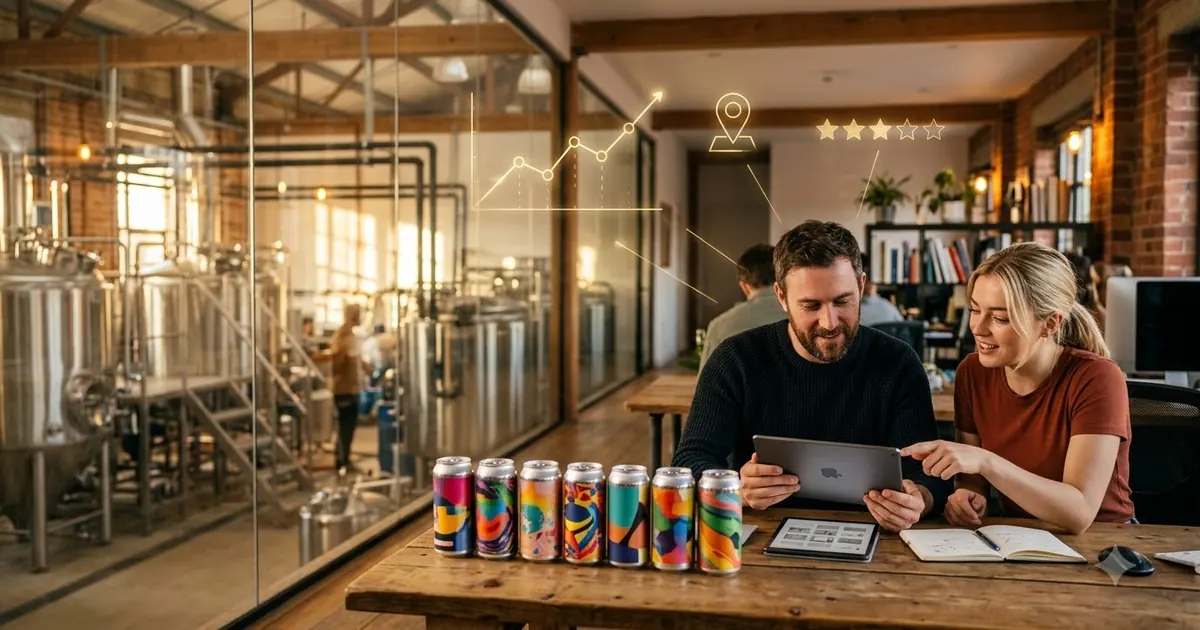
Consumers are changing the way they discover and research food and beverage products. Instead of relying only on traditional Google searches, advertisements, social media or supermarket shelves, people can now use AI-powered search and conversational tools to ask detailed questions, compare products and explore recommendations based on their individual preferences.
A consumer looking for wine may ask, “What is a smooth red wine that pairs well with steak?” Someone searching for beer might ask, “Which low-bitterness beer is good for someone new to craft beer?” A spirits buyer may ask, “What gin is best for a citrus-forward cocktail?” Similarly, a food shopper might search for “high-protein plant-based snacks with simple ingredients.”
This shift is creating a new opportunity for AI brand discovery.
For wine, beer, spirits and food companies, having a strong digital presence is no longer only about ranking for traditional keywords. Brands also need useful, accurate and well-structured information that helps consumers—and AI-powered search experiences—understand their products.
How Is AI Changing Consumer Brand Discovery?
AI is making product discovery more conversational, specific and preference-driven.
Traditional search often requires consumers to identify keywords and visit multiple websites to compare information. AI-powered search allows users to describe what they want in natural language and receive information based on several requirements at once.
For example, instead of searching for:
“Best red wine”
a consumer could ask:
“What is a reasonably priced smooth red wine for a dinner with grilled meat?”
The second query provides considerably more context, including:
- Product category
- Taste preference
- Price consideration
- Occasion
- Food pairing
AI-powered discovery can use these types of contextual requirements to help consumers research and compare products.
For brands, this means product information needs to answer more than “What is this product?” It should also help answer:
- What does it taste like?
- What is it made from?
- Who is it suitable for?
- When should it be used?
- What does it pair well with?
- How is it different from alternatives?
- How should it be served or consumed?
Key Takeaways
- AI is making food and beverage discovery more conversational.
- Consumers can describe detailed preferences instead of using short keywords.
- Product information plays an important role in digital discovery.
- Wine discovery can involve taste, grape variety, region, price and food pairing.
- Beer discovery can involve style, flavour, bitterness and alcohol content.
- Spirits discovery can involve flavour profiles, ingredients, cocktails and occasions.
- Food discovery can involve ingredients, nutrition and dietary preferences.
- GEO and AEO can complement traditional SEO as search behaviour evolves.
- No GEO strategy can guarantee that an AI system will recommend a particular brand.
AI Search for Wine Brands
Wine discovery is influenced by many factors, including taste, grape variety, region, occasion, price, and food pairing.
Consumers may use AI-powered search to ask questions such as:
- What is a good red wine for a dinner party?
- Which wine pairs well with seafood?
- What is a smooth wine for someone new to wine?
- What is the difference between Cabernet Sauvignon and Merlot?
- Which wine would work well with a particular dish?
- What wine should I choose for a special occasion?
These questions show why wine brands need to provide detailed and accessible product information.
A strong wine product page can include:
- Wine type and grape variety
- Region of origin
- Tasting notes
- Aroma and flavour profile
- Food pairing recommendations
- Serving suggestions
- Bottle size
- Alcohol content
- Awards or certifications, where applicable
- Product availability and pricing, where appropriate
For example, rather than describing a wine simply as “a premium red wine,” a product page can explain its grape variety, flavour profile, body, aroma, recommended serving temperature and suitable food pairings.
This gives consumers more useful information when researching their options and creates a stronger digital context around the product.
How Beer Brands Can Benefit from AI-Powered Discovery
Beer discovery can be highly preference-driven. Consumers may look for a particular beer style, flavour, bitterness level, alcohol content or food pairing.
Someone might ask:
- Which beer has a low bitterness level?
- What beer pairs well with spicy food?
- Which beer has a citrus flavour?
- What is the difference between an IPA and a lager?
- Which non-alcoholic beer has a crisp and refreshing taste?
- What beer is suitable for a casual gathering?
For beer brands, product content should clearly communicate the characteristics consumers are likely to consider when making a choice.
Important information can include:
- Beer style
- Flavour profile
- Aroma
- Bitterness
- Alcohol content
- Ingredients
- Brewing method
- Serving recommendations
- Food pairings
- Package size
A beer brand can also create educational content around beer styles, flavour profiles, brewing methods and food pairings.
This type of content helps consumers understand the category while creating additional opportunities for the brand to appear when people search for answers to related questions.
AI Marketing and Discovery for Spirits Brands
Spirits discovery can involve specific flavour preferences, cocktail applications, ingredients, occasions, and price considerations.
Consumers may ask AI-powered search tools:
- Which whiskey is best for an Old Fashioned?
- What gin has citrus-forward flavour notes?
- Which rum is suitable for cocktails?
- What is the difference between bourbon and Scotch whisky?
- Which spirit works well in a particular cocktail?
- What are the main flavour characteristics of a particular spirit?
For spirits brands, detailed product information can help consumers understand where a product fits within their preferences and intended use.
Useful product information can include:
- Spirit category
- Origin
- Flavour profile
- Aroma and tasting notes
- Ingredients or botanicals, where relevant
- Alcohol content
- Recommended serves
- Cocktail applications
- Food pairings
- Bottle size
- Awards or certifications, where applicable
Brands can also publish educational resources covering cocktail recipes, spirit categories, tasting terminology, serving recommendations and product comparisons.
The goal is not simply to promote a product. It is to provide useful information that helps consumers make better-informed decisions.
AI-Powered Food Product Discovery
Food product discovery is closely connected to ingredients, nutrition, dietary preferences, convenience, and lifestyle.
Consumers may use AI to find products that match specific requirements, such as:
- Plant-based foods
- Gluten-free products
- High-protein foods
- Low-sugar options
- Organic products
- Products containing specific ingredients
- Convenient meal options
- Foods suitable for particular dietary preferences
For food brands, product pages should provide clear and accurate information about what the product contains and how it can fit into different use cases.
Useful information may include:
- Ingredients
- Nutritional information
- Allergen information
- Dietary attributes
- Product benefits
- Serving suggestions
- Preparation instructions
- Storage information
- Packaging details
- Relevant certifications
For example, a food product page that simply says “healthy snack” provides limited context.
A more useful page can clearly explain the ingredients, nutritional profile, dietary attributes, serving size and intended use—provided all claims are accurate and supported by the appropriate product information.
What Makes a Brand More Visible in AI Search?
There is no guaranteed formula for appearing in AI-generated answers or receiving an AI recommendation.
Different AI platforms use different systems, sources, and retrieval methods. However, brands can create a stronger digital foundation by making their information accurate, comprehensive, consistent, and easy to understand.
1. Create Detailed Product Pages
Your product pages should provide enough information for consumers to understand the product without having to search multiple websites.
Depending on the product, include:
- Product specifications
- Ingredients
- Flavour or taste profile
- Nutritional information
- Usage instructions
- Serving suggestions
- Food pairings
- Product benefits
- Certifications
- Frequently asked questions
Avoid relying solely on generic marketing language.
2. Answer the Questions Customers Actually Ask
Consumers increasingly use questions rather than simple keywords when researching products.
Create content that answers questions such as:
- Which wine pairs with steak?
- What is the difference between lager and IPA?
- Which spirit is best for an Old Fashioned?
- What does plant-based mean?
- How should this product be served?
- What ingredients are used in this product?
Question-led content is particularly useful for AEO because it directly addresses the information users are looking for.
3. Maintain Consistent Brand Information
Your brand name, product names, descriptions, ingredients, specifications and other important information should remain accurate and consistent across your website and other trusted digital properties.
For example, if the alcohol content or product description differs across important online sources, consumers may receive conflicting information.
Consistency helps establish a clearer digital identity for the brand.
4. Build Topic Authority
Brands should not rely only on product pages.
Create useful educational content around the categories you operate in.
Wine brands can cover:
- Wine varieties
- Wine tasting
- Wine and food pairing
- Wine serving recommendations
- Wine buying guides
Beer brands can cover:
- Beer styles
- Craft beer
- Beer tasting
- Brewing methods
- Beer and food pairing
Spirits brands can cover:
- Spirit categories
- Cocktail guides
- Flavour profiles
- Serving methods
- Spirit comparisons
Food brands can cover:
- Ingredients
- Nutrition
- Recipes
- Dietary preferences
- Product applications
This creates a broader topical relationship between the brand and its product category.
5. Use Structured Data Where Appropriate
Structured data can help search engines understand the information presented on a webpage.
Depending on the page, relevant schema types may include:
- Product
- Organization
- Article
- BreadcrumbList
- Recipe
- FAQPage, when the page genuinely contains qualifying FAQs
Structured data should accurately reflect the visible information on the page. It should not be used to add claims or information that users cannot find on the page.
6. Strengthen Traditional SEO
Generative Engine Optimization does not replace traditional SEO.
Technical SEO, crawlability, internal linking, useful content, page experience, authoritative information and structured data remain important components of a strong digital presence.
A brand that wants to improve AI search visibility should therefore continue investing in its overall organic search foundation.
GEO, AEO and SEO: What's the Difference?
GEO, AEO and traditional SEO address different aspects of modern search visibility.
SEO — Search Engine Optimization
SEO focuses on improving a website's visibility in traditional search engine results.
It can include:
- Keyword optimization
- Technical SEO
- Content optimization
- Internal linking
- Authority building
- Structured data
AEO — Answer Engine Optimization
AEO focuses on providing clear answers to questions that people ask search engines and conversational platforms.
For example:
Question: What wine pairs well with steak?
Answer: Full-bodied red wines are commonly paired with steak, although the ideal choice depends on the preparation, sauce and personal preference.
The answer is direct, useful and easy to understand.
GEO — Generative Engine Optimization
GEO focuses on making information easier for generative and AI-powered search systems to understand and potentially surface in their responses.
This involves creating:
- Clear product information
- Comprehensive topic coverage
- Question-led content
- Consistent business information
- Factual and trustworthy explanations
- Strong contextual relationships between products and topics
For food and beverage brands, these approaches can work together rather than being treated as separate strategies.
Why Product Information Matters for AI Brand Discovery
AI-powered discovery depends heavily on context.
Consider two descriptions of a beer.
Description A:
“Premium craft beer with an exceptional taste.”
Description B:
“A craft IPA with citrus and tropical fruit notes, a pronounced hop aroma and a higher bitterness profile. It is recommended for consumers who enjoy hop-forward beers and pairs well with spicy foods.”
The second description gives consumers significantly more information.
It explains:
Product type → flavour → aroma → bitterness → target preference → food pairing
This type of contextual information can make product content more useful.
The same principle applies across categories.
Wine
Wine → grape variety → region → flavour → occasion → food pairing
Beer
Beer → style → flavour → bitterness → alcohol content → food pairing
Spirits
Spirit → category → flavour → ingredients → cocktail → occasion
Food
Food → ingredients → nutrition → dietary attributes → lifestyle → use case
These relationships help create a clearer understanding of what a product is and why a consumer might choose it.
How Should Food & Beverage Brands Prepare for AI Search?
Brands can begin by auditing their existing digital content.
Ask the following questions:
1. Is our product information complete?
Can consumers understand our product without visiting several other websites?
2. Does our content answer real questions?
Are we addressing the questions customers ask before purchasing?
3. Is our information consistent?
Do product names, ingredients, specifications and other important details remain consistent across our digital presence?
4. Do we have educational content?
Are we publishing useful content beyond product promotion?
5. Can search engines understand our website?
Is the website technically accessible, structured properly and supported by relevant schema?
6. Are we creating content for people first?
Does the content genuinely help consumers, rather than simply repeating keywords?
These questions provide a practical starting point for improving both traditional search visibility and AI-driven discovery.
The Future of AI Brand Discovery for Food & Beverage
AI is changing how consumers research products, but it does not mean that traditional search, advertising, retail discovery or brand awareness are disappearing.
Instead, consumers now have another way to interact with information.
The search journey can increasingly begin with a detailed conversation rather than a short keyword.
A consumer might start with:
“What should I buy?”
and continue with:
“I prefer something less sweet.”
“What would pair well with this meal?”
“Which option is better for this occasion?”
“What is the difference between these two products?”
This means food and beverage brands need digital content that can support consumers throughout this increasingly conversational journey.
The strongest foundation is simple: provide accurate information, answer real questions, and clearly explain what makes your products relevant.
Conclusion
AI is changing the way consumers discover, research, and compare wine, beer, spirits, and food products.
Instead of relying exclusively on traditional keyword searches, consumers can increasingly describe their preferences, ask detailed questions, and explore products based on taste, ingredients, price, dietary needs, occasions, and intended use.
For brands, the opportunity is to build a digital presence that provides clear product information, useful educational content, and direct answers to real customer questions.
AI brand discovery should not be treated as a replacement for SEO. Instead, GEO and AEO can complement traditional SEO by helping brands prepare their content for increasingly conversational and AI-powered search experiences.
At NSP Global Services, we help businesses strengthen their online presence through SEO, website development and digital marketing services. As consumer search behaviour continues to evolve, creating useful, accurate and well-structured digital content can help food and beverage brands stay discoverable and connected with changing customer expectations.
Frequently Asked Questions
1. How is AI changing the way consumers discover food and beverage brands?
AI is making product discovery more conversational and preference-driven. Consumers can describe their requirements, preferences and intended use and receive information, comparisons or recommendations based on those criteria.
2. How does AI search change wine discovery?
AI search allows consumers to explore wines based on factors such as taste, grape variety, price, occasion, region and food pairing instead of relying only on traditional keyword searches.
3. How can consumers use AI to find beer recommendations?
Consumers can describe preferences such as beer style, flavour, bitterness, alcohol content, food pairing or budget. AI-powered search experiences can then help them explore relevant options.
4. How is AI changing spirits discovery?
AI can help consumers research spirits according to flavour profiles, spirit categories, cocktail applications, ingredients, occasions and other product characteristics.
5. How is AI changing food product discovery?
Consumers can use AI-powered search to explore food products according to ingredients, nutritional information, dietary preferences, lifestyle requirements and intended use.
6. What information does AI search use to understand a brand?
Depending on the AI platform and how it retrieves information, sources may include website content, product pages, business information, published articles and other accessible online information.
7. How can a food or beverage brand improve its AI search visibility?
Brands can strengthen their digital discoverability by providing accurate product information, answering customer questions, publishing useful educational content, maintaining consistent business information and following strong SEO and technical website practices.
8. Does GEO guarantee that an AI will recommend my brand?
No. There is no reliable strategy that guarantees an AI system will recommend or cite a particular brand. GEO focuses on making brand information clear, accurate, relevant and accessible so AI-powered search systems can better understand the business and its offerings.
9. Is GEO replacing traditional SEO?
No. GEO and AEO should complement traditional SEO. Technical SEO, crawlability, authoritative content, internal linking, structured data and strong user-focused content remain important for both organic search and AI-powered discovery.

Nishi Singh
(Content Writer & SEO Manager)
NSP Global Services is a leading digital marketing agency specialising in SEO, content strategy, and paid advertisements — helping businesses across SaaS, B2B, and e-commerce achieve measurable growth online.
Posted on: Oct 2, 2026